
Can the Sri Lanan Goverment Investigate the killings of journalists? by Ishankha Singha Arachehi
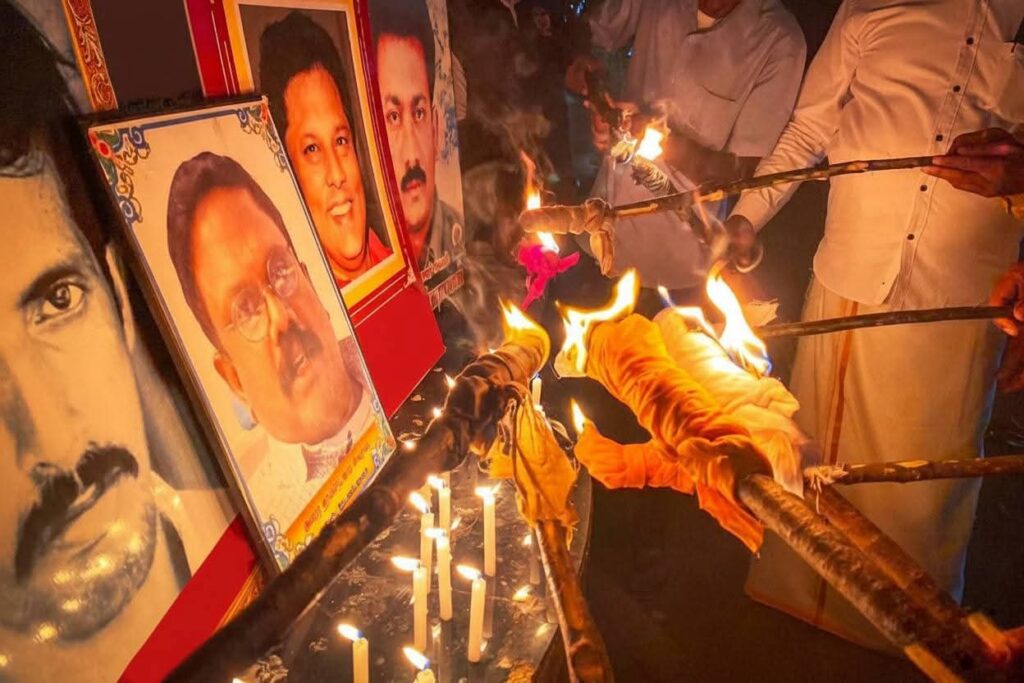
Journalists’ safety and accountability for attacks on media workers remain unresolved concerns in Sri Lanka. A report prepared by Journalists for Democracy in Sri Lanka (JDS) states that forty-four journalists and media workers have been killed or forcibly disappeared by state forces and various armed groups over the past several decades. Although successive governments have repeatedly pledged—often emphatically—to bring those responsible to justice, not a single case has resulted in meaningful accountability.
For the families of the victims and for the broader media community, justice remains elusive. What persists instead is a fragile hope—delayed and long denied.
Black January
Even after the war ended in 2009, protests continued demanding investigations into journalist killings and renewed efforts toward justice. By 2012, media organizations began discussing the need to designate a specific time to collectively commemorate these crimes and sustain public calls for accountability.
Representatives of several media bodies—including the Free Media Movement, the Sri Lanka Professional Journalists Association, the Federation of Media Employers’ Trade Union, the Sri Lanka Tamil Media Association, and the Sri Lanka Muslim Media Forum—agreed to designate January for this purpose.
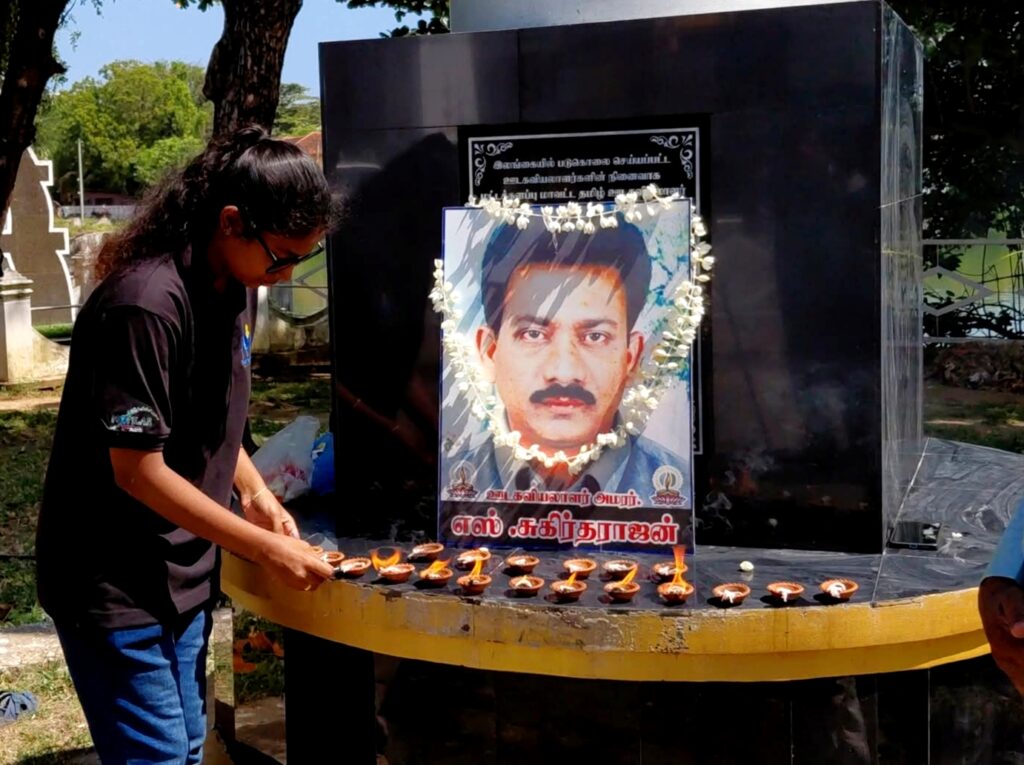
January was selected because a notable number of attacks on journalists occurred during that month. These incidents include the assassination of Sunday Leader editor Lasantha Wickrematunge, the street killing of Sudaroli journalist Sugitharajan Subramaniam, the abduction and enforced disappearance of Lanka E-News journalist and cartoonist Prageeth Eknaligoda, the claymore bomb attack on the Sirasa Media Network, and arson attacks on printing facilities linked to several publications.
However, violence against journalists has occurred throughout the year. “Black January” was therefore conceived not simply as a memorial to incidents in one month, but as a collective protest against impunity for crimes targeting media freedom. Over time, critics argue that this broader purpose has faded, with some viewing the commemoration narrowly as a remembrance of January incidents rather than a sustained campaign for justice.
A Majority from the North and East
According to JDS, a significant proportion of journalists and media workers who were killed or forcibly disappeared came from Sri Lanka’s Northern and Eastern Provinces. With few exceptions, many were affiliated with Tamil-language media institutions.
Among those named in advocacy reporting are Nimalarajan Mailvaganam, Aiyathurai Nadesan, Kannamuthu Arsakumar, Yogakumar Krishnapillai, L. M. Falil, K. Navaratnam, Subramaniam Sugitharajan, Bastian George Sagayadas, Ranjith Kumar, Mariyadasan Manojanraj, Sathasivam Baskaran, Sinnathambi Mahasivarasa, S. Ravindran, Subramaniam Ramachandran, Chandrabose Sudhahar, Selvarasa Rajeevaran, Sahadevan Nilakshan, Antonypillai Sitthiranjan, Vadivelu Nimalarajan, Isaiveli Champion, Suresh Limbio, T. Dharmalingam, P. Devakumar, Rasaiah Jayanthiran, Punyamurthy Sathyamurthy, Sasi Madan, Nallaiah Maheswaran, Anton Benedict, Rajkumar Densi, Jeyarajah Suchitharan, Mariappu Anthony Kumar, Sinkarsivam Sivadarshan, Shobha Isapriya, and T. Thavapalan.
Many of these journalists worked under conditions shaped by war and militarisation. Advocates argue that, despite repeated calls for independent inquiries, no comprehensive or credible investigations have addressed the broader pattern of killings and disappearances affecting media workers.
The current National People’s Power (NPP) government has pledged to examine selected cases, but families and media freedom advocates continue to press for transparent, independent investigations covering all incidents.
Missing Evidence
Government representatives have stated that key evidence, files, and investigative materials connected to several cases have disappeared over time. Many incidents date back more than a decade. Observers question whether critical records were preserved, noting the challenges of reconstructing evidence after long delays.
Responsibility for certain high-profile cases has been attributed, in public discourse and legal proceedings, to elements within the security apparatus. Victims cited in these discussions include Lasantha Wickrematunge, Prageeth Eknaligoda, Keith Noyahr, Upali Tennakoon, Nimalarajan Mailvaganam, Dharmaratnam Sivaram (Taraki), and Poddala Jayantha. Over the years, investigations have included arrests and lengthy legal processes, with varying outcomes.
Despite these efforts, advocates argue that accountability has been inconsistent and limited, reinforcing a perception that justice for murdered or disappeared journalists remains largely unrealized.
Promotions and Controversy
Questions surrounding investigations continue under the present administration. Authorities have cited missing case materials as a barrier, yet controversy has emerged following reports of promotions granted to security personnel accused in ongoing cases. Critics say such actions risk undermining public confidence in the pursuit of justice.
Media coverage has highlighted concerns raised by Sandhya Eknaligoda regarding the promotion of an officer linked to the case involving her husband’s disappearance. She has publicly expressed fears that such developments could affect the integrity of judicial proceedings.
A Continuing Struggle
Sri Lanka’s political landscape has long featured broad support for the military’s wartime role across party lines. In this environment, observers question whether sufficient political and institutional will exists to pursue impartial investigations involving members of the security forces.
Attempts to address wartime accountability have historically faced resistance from various social and political actors. Analysts suggest that similar pressures could influence efforts to advance justice in cases involving attacks on journalists.
Currently, only families of victims consistently attend court proceedings in the few cases still active. Media coverage remains limited, contributing to a sense of public distance from these unresolved matters.
For journalists and the organizations representing them, sustaining pressure for credible investigations is seen as essential. Advocates argue that expediting inquiries into killings, disappearances, arson attacks, and assaults against media workers—and ensuring accountability—remains critical to preventing future abuses. Without continued vigilance, they warn, impunity risks becoming entrenched.

Editor’s Note:
This article represents the author’s analysis and interpretation of publicly discussed issues. The opinions expressed are solely those of the writer and do not necessarily reflect the views or editorial position of the publication. Responsibility for the content rests with the author.

Paris Telegraph is an independent France-based digital news platform covering Paris news, French politics, European affairs, global business, diplomacy and artificial intelligence.
Publishing timely reporting and in-depth analysis, Paris Telegraph provides international perspectives on geopolitics, economic developments, technology innovation and cultural trends shaping Europe and the world.
As a growing online media outlet, Paris Telegraph is committed to credible journalism, global insight and forward-looking analysis for readers seeking reliable news from Paris and beyond.