
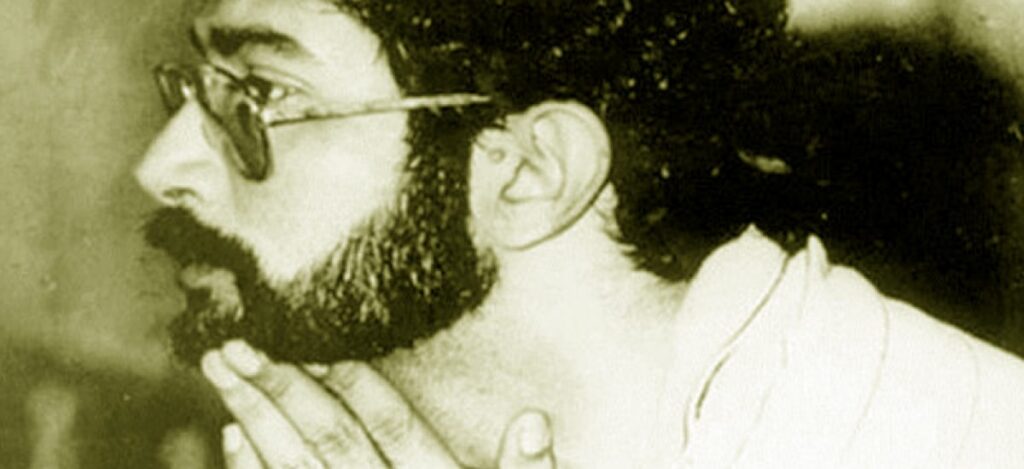
36 Years Without Justice: The Unresolved Killing of Richard de Zoysa and Sri Lanka’s Political Reckoning
By Ishankha Singha Arachchi Saturday 21 / 02 / 2026
Thirty-six years after the abduction and killing of Richard de Zoysa, the case remains one of the most controversial and politically sensitive episodes in modern Sri Lankan history.
A journalist, actor, political commentator and human rights advocate, de Zoysa was abducted in the early hours of 18 February 1990 from his home in Colombo. His body was discovered the following day on a beach in Koralawella, Moratuwa. His death sent shockwaves through Sri Lanka and drew international concern from human rights groups and foreign governments.
Despite the global attention, justice has remained elusive.
A Parliament Divided
In the months following the killing, opposition parties demanded the appointment of an independent Commission of Inquiry. At the time, Sri Lanka was governed by the United National Party (UNP) under President Ranasinghe Premadasa.
The motion for a commission was backed by then Opposition Leader Sirimavo Bandaranaike and supported by several opposition MPs. However, the ruling party rejected the proposal, arguing that existing judicial mechanisms were sufficient.
During a heated parliamentary debate, then Leader of the House Ranil Wickremesinghe contended that the motion itself risked prejudging the case. He emphasized that investigations were ongoing and warned against politicizing human rights concerns.
Other government MPs similarly opposed the commission, asserting that the matter should proceed through established legal channels rather than through a special inquiry.
The motion was ultimately defeated when 120 UNP MPs voted against it, while 71 opposition MPs voted in favor.
Allegations of Interference
Opposition members alleged that judicial proceedings had been obstructed. Criticism centered on the role of the Attorney General’s Department and whether its intervention prematurely curtailed proceedings in the Magistrate’s Court.
At the heart of the controversy was testimony from Dr. Manorani Saravanamuthu, de Zoysa’s mother, who publicly identified individuals she believed were involved in her son’s abduction. Government representatives questioned inconsistencies in her statements, while opposition MPs argued that the credibility of her claims should have been determined by a court or jury rather than dismissed administratively.
The debate expanded beyond the facts of the killing to broader concerns about the rule of law, police independence, and the protection of human rights during a turbulent period marked by political violence.
Political Narratives and Defamation Claims
Shortly after the discovery of de Zoysa’s body, reports circulated alleging links between the journalist and the Janatha Vimukthi Peramuna (JVP), a Marxist insurgent movement active at the time. These claims were strongly denied by opposition figures and several parliamentarians across party lines.
Among those defending de Zoysa’s reputation were future political leaders including Mahinda Rajapaksa and Mangala Samaraweera, who described him as a humanitarian and critic of extremism rather than a partisan actor.
Accusations regarding his personal life and alleged drug use were also raised during parliamentary proceedings. Supporters countered that de Zoysa had been involved in anti-narcotics advocacy and argued that such claims amounted to posthumous defamation.
These exchanges underscored how the case became not only a criminal investigation but also a battleground for political narrative.
International Attention
Calls for accountability were not confined to Sri Lanka’s opposition benches. According to parliamentary records, international concern was voiced by members of the British House of Commons and by global human rights organizations.
The case became emblematic of broader anxieties regarding press freedom and enforced disappearances during the late 1980s and early 1990s — a period widely regarded as one of the most violent chapters in Sri Lanka’s post-independence history.
A Case That Still Resonates
Although subsequent administrations revisited aspects of the case, including during the presidency of Chandrika Bandaranaike Kumaratunga, no definitive judicial resolution has been achieved.
Today, the killing of Richard de Zoysa remains unresolved. For many observers, it symbolizes unanswered questions about state accountability, the limits of judicial independence, and the vulnerability of journalists operating in politically charged environments.
As Sri Lanka continues to navigate its democratic evolution, the case stands as a reminder that unresolved crimes against journalists carry consequences beyond national borders — shaping international perceptions of governance, transparency, and the rule of law.
By Ishankha Singha Arachchi

Ishankha Singha Arachchi is an independent Sri Lankan journalist contributing to several established national publications. Her work examines political developments, parliamentary affairs, and human rights issues within Sri Lanka’s contemporary landscape.
——————————————————
Editor’s Note
This article represents the author’s analysis and interpretation of publicly discussed issues. The opinions expressed are solely those of the writer and do not necessarily reflect the views or editorial position of the publication. Responsibility for the content rests with the author.

Paris Telegraph is an independent France-based digital news platform covering Paris news, French politics, European affairs, global business, diplomacy and artificial intelligence.
Publishing timely reporting and in-depth analysis, Paris Telegraph provides international perspectives on geopolitics, economic developments, technology innovation and cultural trends shaping Europe and the world.
As a growing online media outlet, Paris Telegraph is committed to credible journalism, global insight and forward-looking analysis for readers seeking reliable news from Paris and beyond.