
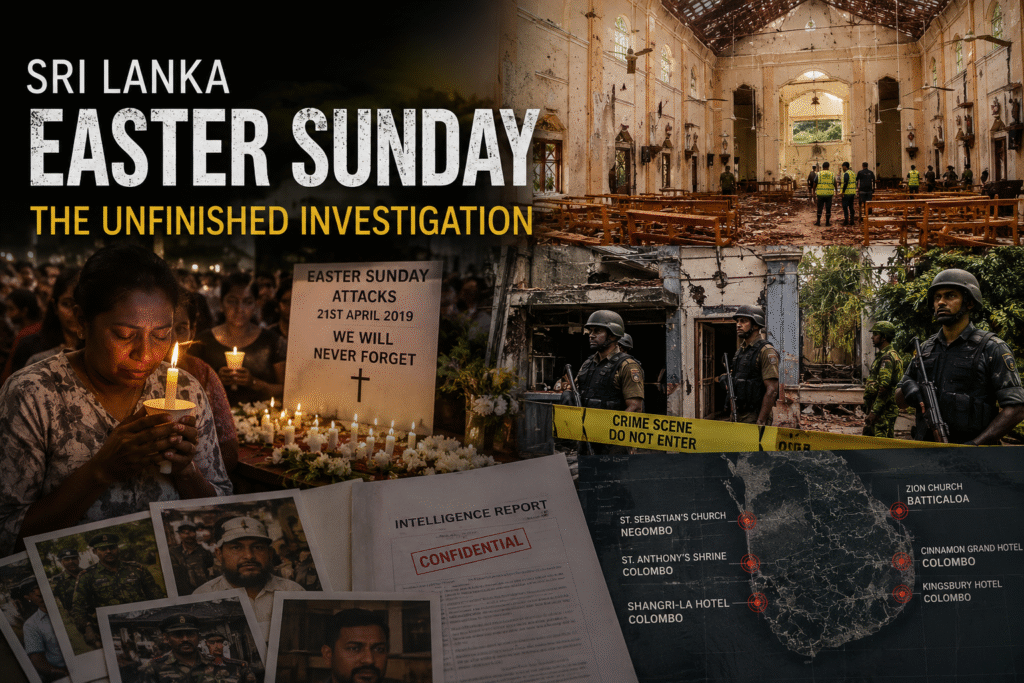
Sri Lanka’s Easter Sunday Attacks: The Unfinished Investigation
Seven Years Later, Sri Lanka Still Searches for the Truth
PARIS, FRANCE — 11 JUNE 2026
By Paris Telegraph Investigative Desk
On the morning of April 21, 2019, as Christians across Sri Lanka gathered to celebrate Easter Sunday, a coordinated series of suicide bombings shattered the nation, leaving a trail of devastation across churches and luxury hotels. Within hours, scenes of worship and celebration had turned into scenes of horror. Families searched desperately for loved ones as emergency services struggled to respond to one of the deadliest terrorist attacks in Sri Lanka’s modern history.
The final official death toll was revised to 269 victims, while more than 500 people were injured. Among the dead were 45 foreign nationals from countries including India, the United Kingdom, the United States, Australia, China, Japan, Denmark, the Netherlands, Portugal, Spain, Switzerland and Turkey. The attacks not only traumatized Sri Lanka but also sent shockwaves across the international community.
The bombings targeted three churches—St. Anthony’s Shrine in Colombo, St. Sebastian’s Church in Negombo, and Zion Church in Batticaloa—as well as three luxury hotels in Colombo: the Shangri-La, Cinnamon Grand and Kingsbury Hotel. Investigators later identified the attackers as members of the extremist organization National Thowheeth Jama’ath (NTJ), led by Zahran Hashim, who had pledged allegiance to ISIS. The Islamic State group subsequently claimed responsibility for the attacks.
Initially, the official narrative appeared straightforward: a locally organized extremist network inspired by ISIS had carried out coordinated suicide attacks against Christians and foreign visitors. However, as investigations progressed, a disturbing fact emerged. Sri Lankan authorities had reportedly received multiple intelligence warnings before the attacks took place..
The Day Sri Lanka Changed
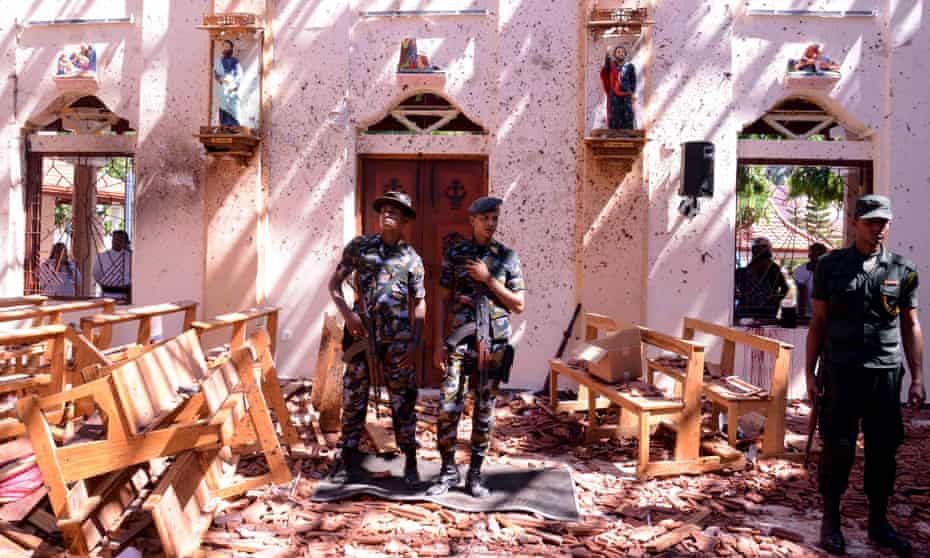
Subsequent investigations revealed that Indian intelligence agencies had provided detailed warnings regarding a possible terrorist plot, including information about suspected extremists and potential targets. Despite these warnings, no effective preventive action was taken. Parliamentary inquiries, presidential commissions and independent investigations later identified serious failures within Sri Lanka’s security and intelligence apparatus. For many victims’ families, the issue was no longer merely terrorism; it became a question of accountability.
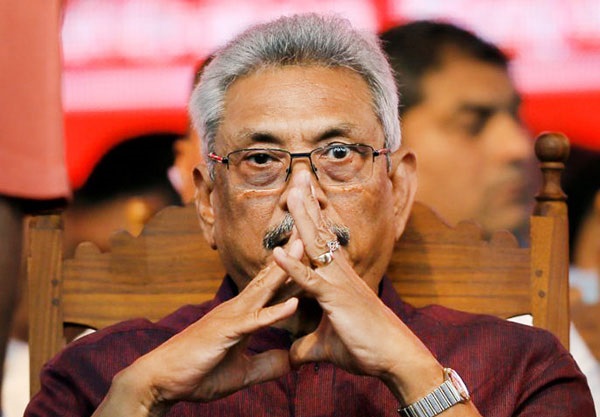
The attacks also dramatically altered Sri Lanka’s political landscape. Taking place only months before the 2019 presidential election, the bombings triggered widespread public concern over national security. Former Defence Secretary Gotabaya Rajapaksa emerged as a leading political figure promising stability and security and later won the presidential election in November 2019. The sequence of events led some critics to question who ultimately benefited politically from the tragedy, while supporters of the Rajapaksa family dismissed such claims as unfounded conspiracy theories.
Economic Impact
The attacks also devastated Sri Lanka’s tourism industry.
Tourist arrivals declined sharply.
Hotels reported mass cancellations.
The economic impact ran into hundreds of millions of dollars as confidence in Sri Lanka’s security environment collapsed.
For many families, however, the greatest loss cannot be measured in statistics.
Every number represents a life that never returned home.
The Warning Nobody Acted On
Investigations later revealed that Sri Lankan authorities had received detailed intelligence warnings before Easter Sunday.
Indian intelligence agencies reportedly provided information regarding potential attacks, suspected extremists, and possible targets.
Yet no effective action was taken.
Parliamentary committees, presidential commissions, and subsequent investigations all identified serious failures within the security apparatus.
The question soon became:
Why were the warnings ignored?
Was it incompetence?
Negligence? Or something more deliberate?
For many victims’ families, the issue was no longer merely terrorism.
It became a question of accountability.
Channel 4’s Explosive Allegations
In September 2023, British broadcaster Channel 4 aired a documentary that reignited the controversy surrounding the Easter Sunday attacks.
The controversy deepened in September 2023 when British broadcaster Channel 4 aired a documentary featuring testimony from whistleblower Hanzeer Azad Maulana. In the documentary, Maulana alleged that meetings had taken place between extremist operatives and individuals linked to Sri Lankan military intelligence prior to the attacks. According to the allegations, elements within the state security establishment may have cultivated or manipulated extremist networks in order to create political conditions favorable to a change in government. Those accused strongly denied the allegations, and no court has established the claims as proven fact. Nevertheless, the documentary significantly altered public debate surrounding the Easter Sunday attacks.
The Arrest That Changed Everything
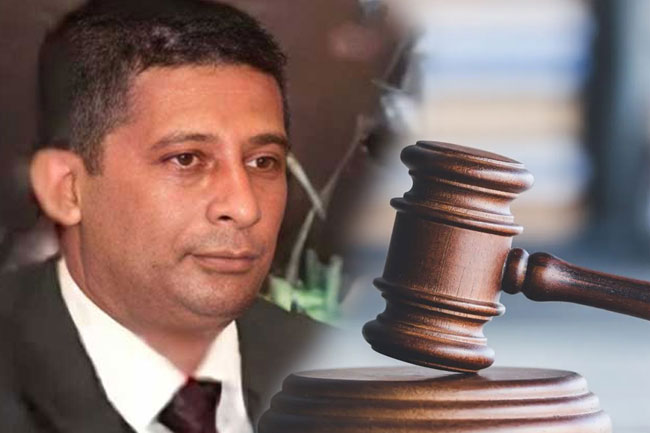
A major development occurred on February 25, 2026, when Sri Lanka’s Criminal Investigation Department arrested former State Intelligence Service Director Major General (Ret.) Suresh Sallay. Authorities stated that he was being investigated on suspicion of conspiracy, aiding and abetting, and possible involvement in matters connected to the Easter Sunday bombings. The arrest marked the first time a former intelligence chief had been detained in connection with the attacks and signaled a significant shift in the direction of the investigation.
The Government’s Most Serious Allegation Yet
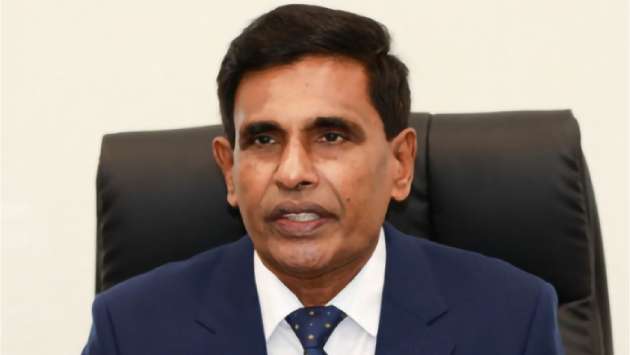
The investigatiThe case took another dramatic turn in June 2026 when Public Security Minister Ananda Wijepala told Parliament that investigators had uncovered evidence allegedly linking Sallay to extremist operatives before the attacks. The minister claimed that former intelligence officials may have played a more active role than previously believed. Sallay has denied all allegations through his legal representatives, and no court has found him guilty of any offence. The investigation remains ongoing.on took another dramatic turn in June 2026.
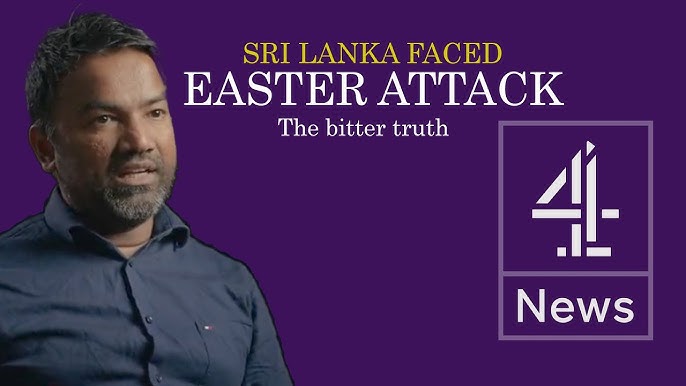
Another unresolved issue has emerged involving whistleblower Azad Maulana. Sri Lanka’s Criminal Investigation Department has reportedly stated that investigators obtained a statement from Maulana as part of the ongoing inquiry. However, questions remain regarding the circumstances under which that statement was obtained. Maulana, who has publicly stated that he is under international protection outside Sri Lanka, has become a central figure in the controversy surrounding the Channel 4 allegations.
If a protected individual residing in France met Sri Lankan investigators, legal observers argue that important questions arise. Was the meeting voluntary? Where did it take place? Were French authorities informed? Was the interview conducted through formal judicial cooperation mechanisms? Did French authorities authorize or supervise any part of the process? At present, there is no publicly available evidence that French law, refugee protections or international legal standards were violated. Nevertheless, the circumstances surrounding the reported interview have generated additional scrutiny and debate.
The France Question: A New Mystery Emerges
Another question has recently emerged from the Easter Sunday investigation.
If a protected individual residing in France met Sri Lankan investigators, legal observers say several important questions arise.
Was the meeting voluntary?
Where exactly did the meeting take place?
Was it conducted at a diplomatic facility, private residence, or another location?
Were French authorities informed beforehand?
Was the interview conducted through official judicial cooperation procedures?
Did French authorities supervise or authorize any part of the process?
Was legal counsel present?
These questions have become increasingly important because refugee and asylum protection systems are designed to protect individuals who claim fear of persecution from their country of origin.
The issue is not whether a protected person can voluntarily communicate with authorities from their home country.
In some circumstances, such contact may occur.
The issue is whether proper legal procedures were followed and whether the protections associated with international asylum status were respected.
At present, there is no publicly available evidence proving that French law, refugee protections, or international legal standards were violated.
However, the circumstances surrounding the reported interview have become another unresolved aspect of an already controversial investigation.
For critics of the investigation, the matter raises additional questions.
For supporters, obtaining testimony from a key witness may be viewed as an important step toward uncovering the truth.
Either way, the issue has become another chapter in the continuing search for answers.
A Growing Circle of Questions
Seven years after the attacks, investigators, victims’ families, journalists, and human rights advocates continue to ask difficult questions:
- Why were intelligence warnings ignored?
- Were security failures caused by incompetence or design?
- Did intelligence officials maintain contacts with extremist networks?
- Did political actors benefit from the climate of fear that followed?
- Were extremist groups manipulated by forces beyond their own leadership?
- Were key witnesses handled according to international legal standards?
- Will the ongoing investigations finally reveal the complete truth?
These questions remain at the center of one of the most controversial investigations in modern Sri Lankan history.
The Victims Still Wait
Seven years after the attacks, investigators continue to grapple with a growing list of unanswered questions. Why were intelligence warnings ignored? Were security failures the result of incompetence, negligence, or something more deliberate? Did intelligence officials maintain contacts with extremist networks? Did any political actors benefit from the climate of fear that followed the attacks? Were extremist groups manipulated by forces beyond their own leadership? These questions remain at the center of one of the most consequential investigations in modern Sri Lankan history.
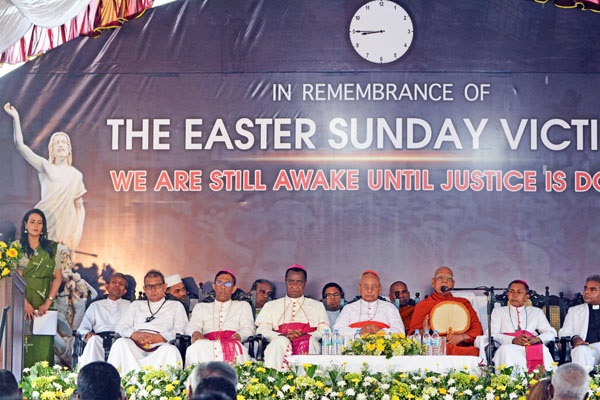
For the families of the victims, however, the search for truth remains deeply personal. Religious leaders, victim groups and civil society organizations continue to demand accountability and transparency. While the role of ISIS-inspired extremists in carrying out the attacks is widely accepted, debate continues over whether others may have facilitated, enabled or failed to prevent the tragedy.
The Easter Sunday bombings killed 269 people and changed Sri Lanka forever. The physical scars remain visible, while the political and emotional wounds continue to shape public life. What began as a terrorism investigation has evolved into a broader examination of intelligence operations, political power, accountability and the rule of law.
Seven years later, one question still hangs over the country: was Easter Sunday solely an act of extremist terrorism, or was it part of a larger story whose full details have yet to emerge? Investigators, courts and future inquiries may eventually provide the answer. For now, Sri Lanka continues to wait.

Editorial Note: This article is written in an investigative journalism . It distinguishes between established facts, allegations, and unresolved questions. References to intelligence involvement, political motives, or individual responsibility remain allegations unless and until established by a court of law or conclusive official findings.
This report is based on court records, official investigations, parliamentary proceedings, public statements, media reports, and ongoing legal developments as of June 2026.
By Paris Telegraph Investigative Desk

Paris Telegraph is an independent France-based digital news platform covering Paris news, French politics, European affairs, global business, diplomacy and artificial intelligence.
Publishing timely reporting and in-depth analysis, Paris Telegraph provides international perspectives on geopolitics, economic developments, technology innovation and cultural trends shaping Europe and the world.
As a growing online media outlet, Paris Telegraph is committed to credible journalism, global insight and forward-looking analysis for readers seeking reliable news from Paris and beyond.