
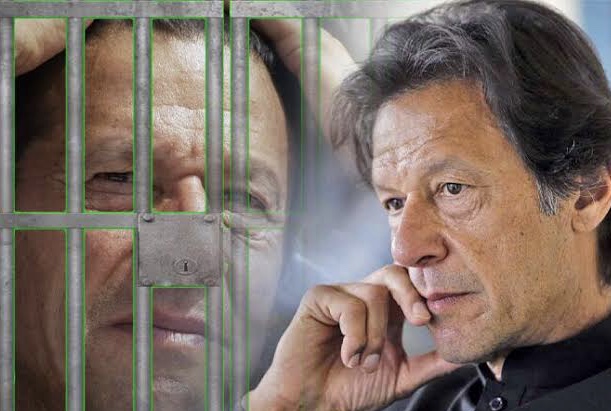
Jailed, Isolated, and Rumoured Dead: Imran Khan’s Ordeal Exposes Pakistan’s Deepening Democratic Crisis
By U.H. Hyder Ali
Pakistan is once again at a dangerous crossroads. Former Prime Minister Imran Khan, imprisoned since 2023 and now held under increasingly opaque conditions, has become the centre of a political storm after rumours exploded across Pakistan claiming he had been killed inside Adiala Jail. Authorities rushed to deny the reports, but the very fact that millions of Pakistanis believed them speaks to a deeper, more troubling truth: a nation that no longer trusts its rulers, its institutions, or its future.
At the heart of this crisis lies a paradox that is drawing international scrutiny. Prime Minister Shehbaz Sharif, accused at home of crushing democratic opposition, is simultaneously lobbying abroad in support of a Nobel Peace Prize nomination for former U.S. President Donald Trump. Analysts say it is an extraordinary contradiction — a government championing global peace while standing accused of silencing, isolating, and politically destroying its most popular democratic rival.
A Former Prime Minister Behind Walls — And Behind a Veil of Silence
Imran Khan, who remains one of the most influential political figures in Pakistan’s history, is currently serving a 14-year sentence in Rawalpindi’s Adiala Jail after a series of rapid, highly controversial convictions. For the past several weeks, he has been denied access to family and lawyers, despite repeated court permissions.
This blackout created the perfect vacuum for the rumour that shook the nation: that Khan had died in custody.
Videos of panicked supporters, mass prayers, and spontaneous street protests spread across the country within hours.
Adiala Jail officials issued a statement insisting Khan is “in good health,” but no independent party has been allowed to verify his condition — a fact that only fueled public suspicion.
“When a leader is kept in total isolation and the government blocks every channel of communication, people will fear the worst,” said a PTI lawyer.
“If the state is telling the truth, why not let anyone meet him?”
This question remains unanswered.
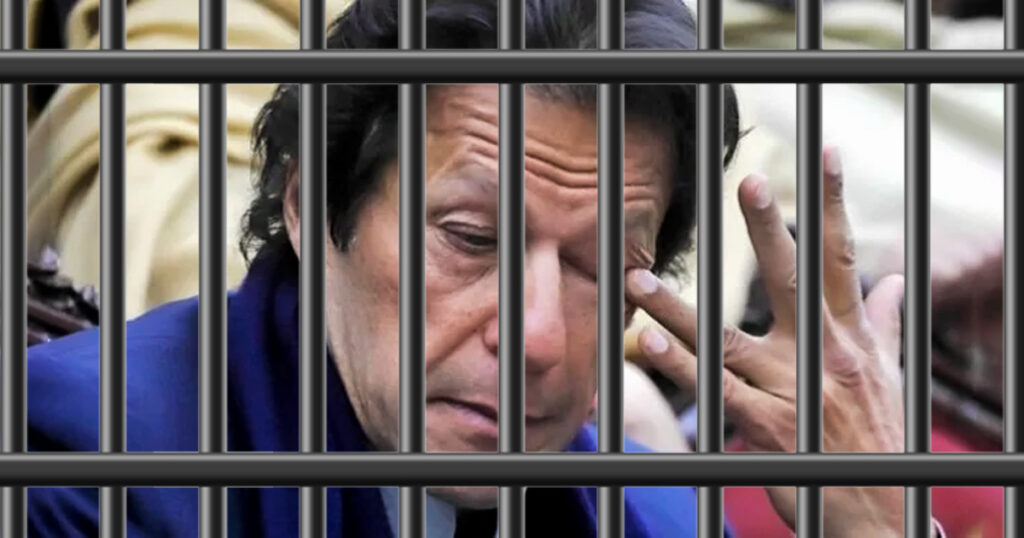
Why Pakistanis Believe the Worst: A Crisis of Trust
The speed with which rumours of Khan’s death gained traction reflects something far deeper than social-media panic: a profound crisis of trust between Pakistan’s civilians and its state institutions.
For millions of Pakistanis, Khan’s imprisonment is not seen as lawful accountability but as a coordinated political operation involving the government, the judiciary, and — most notably — the country’s powerful military establishment.
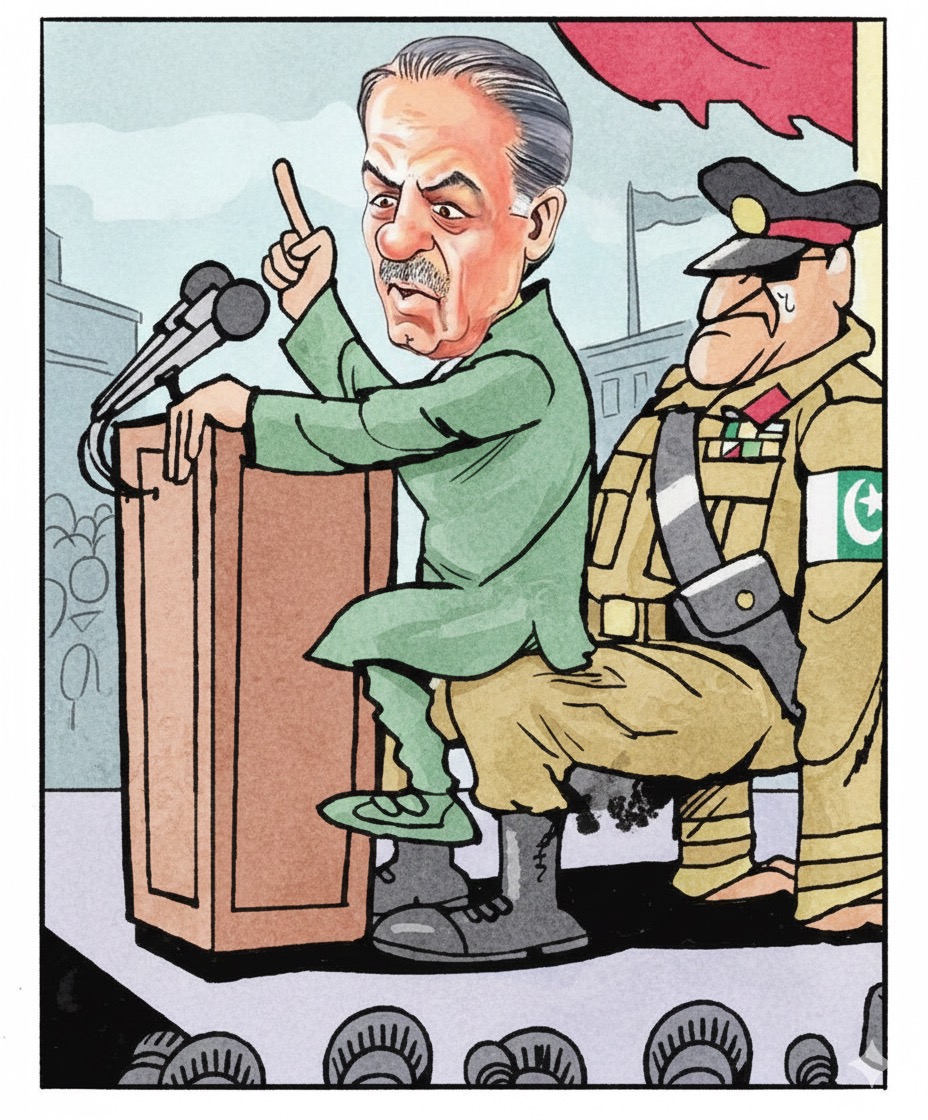
The Military’s Heavy Hand: Pakistan’s Open Secret
Pakistan’s military, long the true centre of political power, is widely believed to be the architect of the aggressive campaign to dismantle Imran Khan’s political influence. Though the government denies it, few in Pakistan doubt the army’s involvement.
Former officials, analysts, and even foreign diplomats describe the current system as a “hybrid regime”: civilian in appearance, military in operation.
The crackdown on Khan and PTI — arrests, abductions, defections, media blackouts — bears the hallmark of the military’s decades-long pattern of neutralizing leaders who challenge its dominance.
A political scientist at Lahore University, requesting anonymity, put it bluntly:
“Every time Pakistan gets a leader with mass public support, the establishment intervenes. Imran Khan is just the latest chapter in a 70-year-old playbook.”
Rushing the Trials, Silencing the Opposition
Khan’s legal onslaught unfolded at an extraordinary pace:
- The Cipher Case: accused of leaking state secrets.
- The Toshakhana Case: accused of misusing state gifts.
- Land Trust Case: resulted in a 14-year sentence.
Trials were frequently held in closed rooms inside prison walls. Journalists were denied access. Defence lawyers said they received evidence minutes before hearings.
PTI calls the entire process a “judicial assassination.”
The People’s Verdict: A Martyr, Not a Criminal
The government may have locked Khan away, but his popularity has not diminished — it has intensified.
Across Pakistan, from Karachi to Peshawar, the sentiment is similar:
“They fear his popularity, not his crimes,” said Ahmed Raza, a shopkeeper in Lahore.
“If he was free today, he would win tomorrow.”
Khan’s isolation, harsh treatment, and the swirling rumours of his death have gifted him the very thing his opponents fear most: the status of a martyr.
The Economic Inferno: Inflation Breaking the Nation
Compounding the political crisis is a devastating economic collapse:
- Inflation at record highs
- Fuel prices up sharply
- Electricity costs crippling households
- Rupee plunging to new lows
- Businesses shutting down
- Youth unemployment soaring
For many ordinary Pakistanis, daily survival has become a battle.
While people queue for flour and worry about their bills, the government is campaigning for Donald Trump’s Nobel nomination — a move widely seen as absurd and disconnected from reality.
The Nobel Peace Prize Controversy: Political Theater or Diplomatic Gambit?
Prime Minister Shehbaz Sharif’s push to nominate Donald Trump for the Nobel Peace Prize, citing the Abraham Accords, has perplexed analysts.
International observers question why a country battling economic collapse, political turmoil, and public unrest is investing energy in a symbolic international award for a foreign leader.
Political analyst Dr. Ayesha Siddiqa described it as:
“A tragicomic distraction — a photo-op masquerading as foreign policy.”
For Khan’s supporters, the message is crystal clear:
The government is busy polishing its global image while its own democracy burns at home.
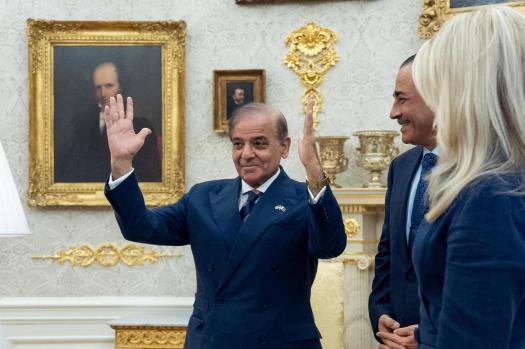
The Sharif Paradox: A Leader Seeking Global Applause While Cracking Down at Home
To watch the Shehbaz Sharif government operate is to witness a remarkable contradiction: a leadership desperate for international legitimacy yet presiding over one of the darkest periods of domestic repression in decades.
Sharif’s War on Political Competition
The crackdown on Imran Khan is not just political rivalry — it is a systematic dismantling of democratic choice.
Trials have been rushed. Courts pressured. Media silenced. Citizens intimidated.
Sharif insists the law is taking its course. But no democratic country in the world conducts justice behind prison walls, denies legal access, and blocks media scrutiny while preaching transparency abroad.
Economic Mismanagement of Historic Proportions
Sharif entered office branding himself a “competent administrator.” Instead, he has delivered:
- soaring inflation
- mass unemployment
- foreign debt dependence
- a collapsed rupee
Families are skipping meals. Businesses are closing. Hope is evaporating.
A Government in Name Only?
Perhaps most troubling is the widespread perception that Sharif is not truly in control — that the military establishment continues to dictate political outcomes behind closed doors.
Sharif’s silence in the face of state repression speaks volumes.
History’s Verdict
History will remember Shehbaz Sharif not as a reformer or stabilizer, but as the civilian face of a repressive regime that:
- crushed opposition,
- sabotaged democracy,
- oversaw economic collapse, and
- drove Pakistan into deeper instability.
For Pakistan’s future, the cost of such leadership may prove devastating.
U.H. Hyder Ali

Paris Telegraph is an independent France-based digital news platform covering Paris news, French politics, European affairs, global business, diplomacy and artificial intelligence.
Publishing timely reporting and in-depth analysis, Paris Telegraph provides international perspectives on geopolitics, economic developments, technology innovation and cultural trends shaping Europe and the world.
As a growing online media outlet, Paris Telegraph is committed to credible journalism, global insight and forward-looking analysis for readers seeking reliable news from Paris and beyond.