
If the Strait of Hormuz Closes: A Shockwave Through the Global Economy
01 March 2026 Paris Telegraph
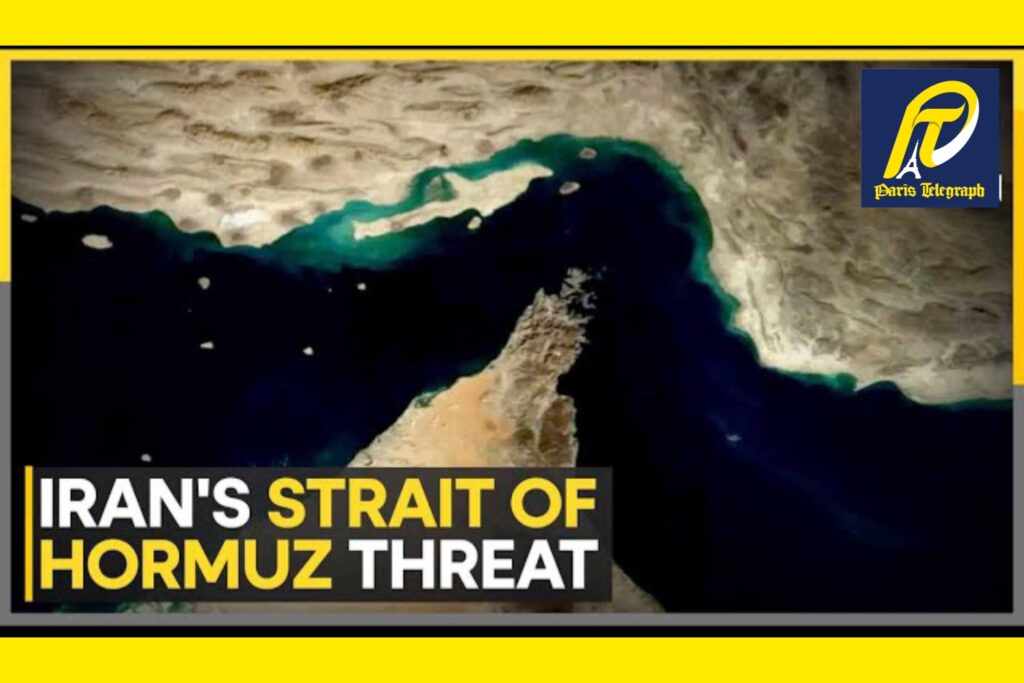
The Strait of Hormuz is one of the most strategically important waterways in the world. Narrow, tense, and geopolitically sensitive, this passage connects the Persian Gulf to global markets. Nearly one-fifth of the world’s oil supply and a substantial share of liquefied natural gas (LNG) transit this corridor every day.
If it were to close — even temporarily — the consequences would reverberate far beyond the Middle East.
The Immediate Market Reaction
Energy markets are highly sensitive to disruption risk. A closure would likely send crude oil prices soaring within hours. Analysts estimate that prices could spike dramatically depending on the duration and severity of the disruption. Insurance premiums for tankers would surge, shipping routes would be rerouted where possible, and global markets would enter a period of sharp volatility.
Major Gulf exporters — including Saudi Arabia, Iraq, Kuwait, Qatar, United Arab Emirates and Iran — depend heavily on this maritime route for exports. A sustained blockage would effectively remove millions of barrels of oil per day from global circulation.
Europe: Inflation and Industrial Strain
For Europe, the shock would be significant. Since the outbreak of the Russia-Ukraine War, European nations have reduced their energy dependence on Russia and diversified toward Middle Eastern suppliers and LNG imports.
A Hormuz disruption would therefore strike at a delicate moment. Electricity prices could rise sharply, particularly in industrial economies such as Germany and France. Higher fuel costs would feed directly into food prices, transportation, and manufacturing. Inflation — which central banks have worked hard to contain — could accelerate once again.
The European Central Bank would face a difficult balancing act between controlling inflation and preventing economic stagnation.
The United States: Energy Producer, Global Price Taker
The United States is now one of the world’s largest oil producers. However, oil is priced globally. Even with strong domestic production, American consumers would not be insulated from a global supply shock.
Fuel prices would climb, equity markets would likely fall amid uncertainty, and the Federal Reserve might reconsider its monetary trajectory if inflation resurges. Washington would also face strategic pressure to ensure freedom of navigation, potentially increasing naval deployments in the Gulf region.
Asia: The Most Vulnerable Region
Asia stands as the most exposed to a Hormuz closure. Economies such as China, India, Japan and South Korea rely heavily on Gulf energy imports.
A prolonged disruption could trigger currency volatility, energy rationing, and industrial slowdowns. For emerging economies already grappling with debt pressures, higher energy bills could destabilize fiscal balances.
Broader Global Consequences
Short-term effects would likely include:
- A sharp spike in oil and gas prices
- Volatility across stock and bond markets
- Rising gold prices as investors seek safe havens
- Increased shipping and insurance costs
If the disruption extended for months, the world could face recessionary pressures. Supply chains — already fragile in recent years — would experience renewed strain.
At the same time, such a crisis could accelerate long-term shifts: investment in renewable energy, diversification of supply chains, and greater strategic petroleum reserves.
A Calculated Risk
It is important to note that a full, prolonged closure of the Strait of Hormuz would also damage the economies of Gulf exporters themselves. For this reason, many analysts view a sustained shutdown as unlikely unless linked to a broader regional conflict.
Yet even the threat of closure is enough to unsettle markets.
In a world still recovering from pandemic disruptions, war in Eastern Europe, and inflationary pressures, the Strait of Hormuz remains a reminder of how a narrow strip of water can influence the fate of the global economy.
Paris Telegraph Global Affairs Desk

Paris Telegraph is an independent France-based digital news platform covering Paris news, French politics, European affairs, global business, diplomacy and artificial intelligence.
Publishing timely reporting and in-depth analysis, Paris Telegraph provides international perspectives on geopolitics, economic developments, technology innovation and cultural trends shaping Europe and the world.
As a growing online media outlet, Paris Telegraph is committed to credible journalism, global insight and forward-looking analysis for readers seeking reliable news from Paris and beyond.