
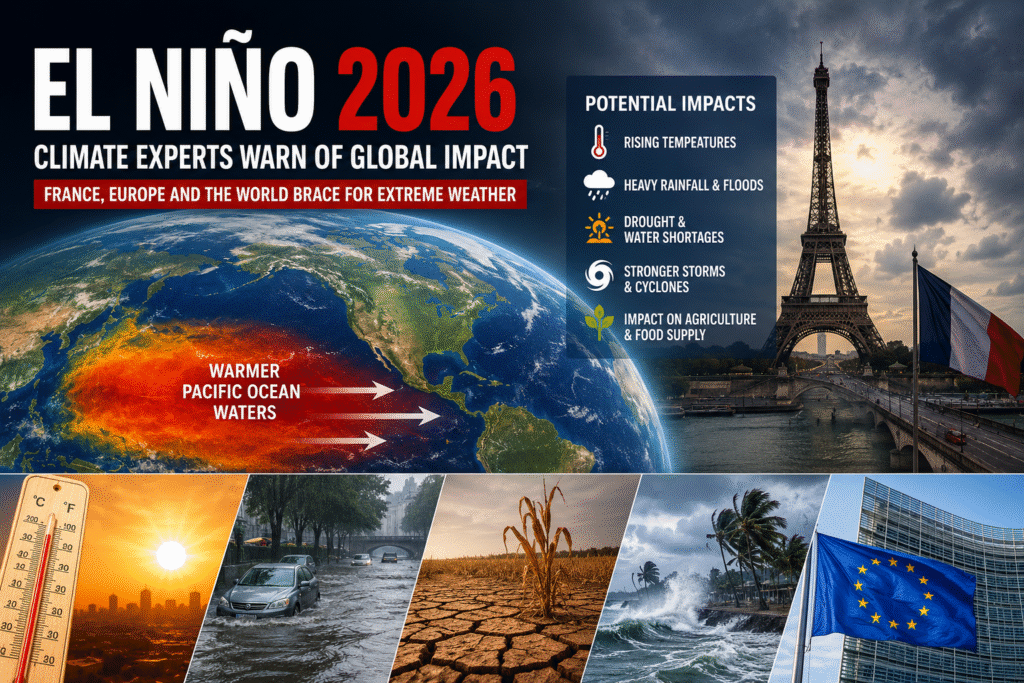
El Niño 2026: Climate Experts Warn of Major Impact on France, Europe, and the World
Paris 10/06/2026
Rising Pacific Ocean temperatures could trigger heatwaves, floods, droughts, and economic disruption across multiple continents.
PARIS — Climate scientists are closely monitoring the return of the powerful weather phenomenon known as “El Niño,” warning that it could significantly affect weather patterns across France, Europe, and the wider world throughout 2026.
Originating in the Pacific Ocean, El Niño is a naturally occurring climate event that develops when sea surface temperatures in the central and eastern Pacific become unusually warm. Although it begins thousands of kilometres away from Europe, its effects can influence global temperatures, rainfall, agriculture, and extreme weather conditions worldwide.
Experts say the latest developments in Pacific Ocean temperatures are raising concerns about another period of climate instability.
What Is El Niño?
El Niño is part of a larger climate cycle known as the El Niño-Southern Oscillation (ENSO). During an El Niño event, trade winds that normally push warm ocean water toward Asia weaken, allowing warmer waters to move eastward toward the Americas.
This shift disrupts atmospheric circulation and alters weather systems across the globe.
Historically, strong El Niño events have been linked to:
- Record global temperatures
- Severe droughts
- Flooding
- Heatwaves
- Tropical storm disruptions
- Agricultural losses
Scientists note that some of the hottest years ever recorded globally occurred during major El Niño periods.
How Could El Niño Affect France?
Meteorologists say France may experience several indirect but serious consequences if El Niño intensifies.
Increased Heatwaves
France could face hotter-than-normal summer conditions, particularly in urban areas including Paris, Marseille, Lyon, and Toulouse. Extended periods of extreme heat may place pressure on healthcare systems, energy supplies, and water resources.
Higher Risk of Drought
Agricultural regions may experience reduced rainfall and water shortages, potentially affecting crop production and livestock farming.
French vineyards could also face changing grape quality due to unusual temperature variations and dry conditions.
Storms and Flooding
Although some regions may become drier, changing atmospheric patterns linked to El Niño can also increase the risk of heavy rainfall and flooding during autumn and winter seasons.
Economic Consequences
Climate-related disruptions may impact:
- Food prices
- Energy costs
- Insurance sectors
- Transportation systems
- Tourism industries
Experts warn that global supply chain pressures linked to extreme weather may also affect European economies.
Impact Across Europe
The effects of El Niño vary depending on geographical location.
Southern Europe
Countries including Spain, Italy, Greece, and Portugal may experience:
- Severe heatwaves
- Wildfires
- Water shortages
- Drought conditions
Northern Europe
Northern parts of Europe could see:
- Wetter winters
- Increased storm activity
- Flood risks
Alpine Regions
Climate experts are also concerned about:
- Reduced snowfall
- Accelerated glacier melting
- Damage to winter tourism industries
Pacific Ocean Regions Face Direct Threat
Pacific island nations are among the most vulnerable during El Niño events.
Rising ocean temperatures may cause:
- Coral bleaching
- Marine ecosystem damage
- Coastal erosion
- Fish migration changes
- Cyclone disruptions
Countries across the Pacific often experience major environmental and economic impacts during strong El Niño periods.
Global Effects Across Asia, Africa, and the Americas
Asia
Several Asian countries may face:
- Heavy rainfall
- Flooding
- Landslides
- Typhoon disruptions
India, Indonesia, China, and the Philippines are often heavily affected during strong El Niño cycles.
Africa
Parts of Africa may experience:
- Drought
- Food insecurity
- Agricultural decline
- Water scarcity
North and South America
South American countries including Peru and Ecuador frequently experience coastal flooding, while parts of North America may see warmer winter conditions.
Is Climate Change Making El Niño More Dangerous?
Scientists continue studying the relationship between climate change and El Niño. Many researchers believe rising global temperatures could intensify the severity of extreme weather linked to El Niño events.
Warmer oceans may amplify:
- Heatwaves
- Droughts
- Heavy rainfall
- Ocean temperature records
However, experts say additional long-term research is still needed to fully understand the connection.
Could 2026 Become One of the Hottest Years on Record?
Several international climate agencies have warned that the combination of El Niño and ongoing global warming could push global temperatures to record highs in 2026.
Recent years have already broken multiple climate records worldwide.
Governments Urged to Prepare
Environmental experts are urging governments to strengthen:
- Flood protection systems
- Heat emergency plans
- Water management strategies
- Agricultural adaptation measures
- Climate resilience infrastructure
Although El Niño begins in the Pacific Ocean, its impact stretches across the planet. France and Europe could face increased climate risks ranging from heatwaves and droughts to storms and economic disruption.
As scientists continue monitoring ocean temperatures and atmospheric changes, authorities worldwide are being urged to prepare for increasingly unpredictable weather conditions in the years ahead.

Paris Telegraph is an independent France-based digital news platform covering Paris news, French politics, European affairs, global business, diplomacy and artificial intelligence.
Publishing timely reporting and in-depth analysis, Paris Telegraph provides international perspectives on geopolitics, economic developments, technology innovation and cultural trends shaping Europe and the world.
As a growing online media outlet, Paris Telegraph is committed to credible journalism, global insight and forward-looking analysis for readers seeking reliable news from Paris and beyond.