
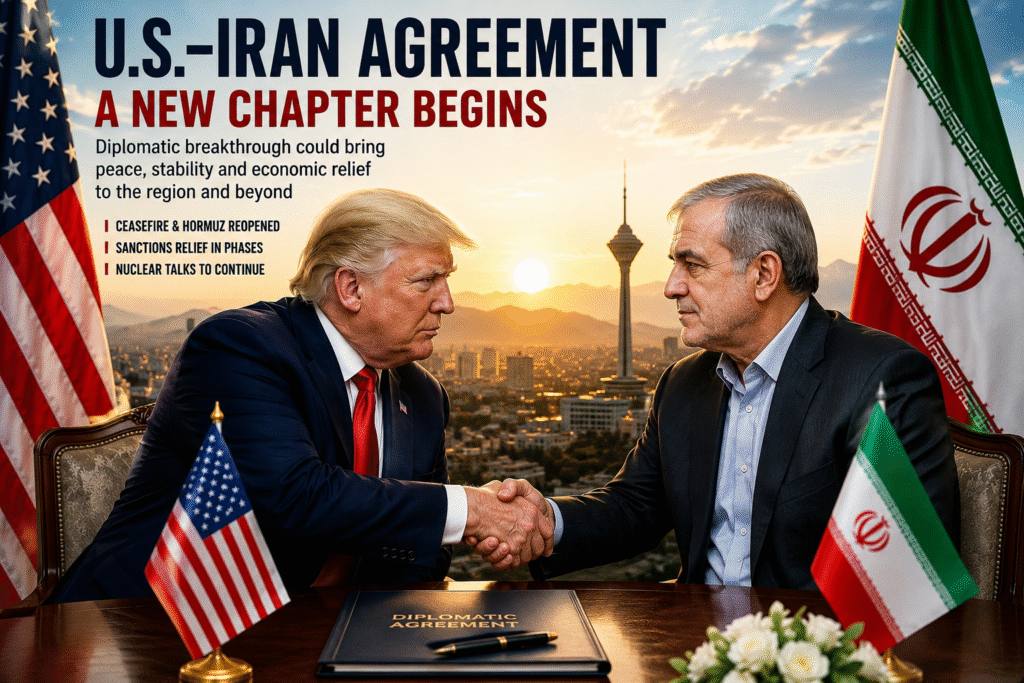
IRAN–TRUMP PEACE AGREEMENT: WHAT IS IN THE DEAL, WHO BENEFITS, AND WHAT HAPPENS NEXT?
By Paris Telegraph International News Desk
June 15, 2026
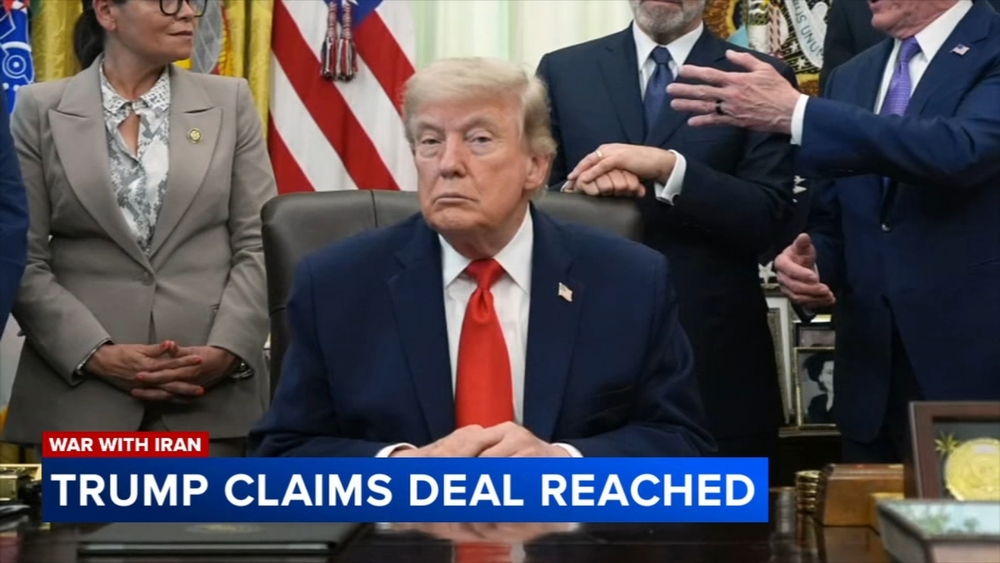
A major diplomatic breakthrough appears to be emerging between the United States and Iran following months of military confrontation, economic disruption, and rising fears of a wider Middle East conflict. President Donald Trump announced that Washington and Tehran have reached a framework agreement aimed at ending hostilities, reopening vital shipping routes, and launching a new phase of negotiations over Iran’s nuclear program.
While officials from both sides have described the agreement as historic, many details remain under discussion, and a final signing ceremony is still expected. Nevertheless, the proposed accord has already generated significant international attention, financial market reactions, and political debate across the world.
The agreement follows approximately 15 weeks of escalating tensions between the United States, Israel, and Iran. The conflict severely disrupted maritime traffic through the Strait of Hormuz, one of the world’s most important energy corridors through which nearly one-fifth of global oil supplies normally pass.
The crisis triggered sharp increases in oil prices, concerns over inflation, shipping disruptions, and fears of a broader regional war. As diplomatic channels intensified through mediation efforts led by Pakistan and Qatar, both Washington and Tehran gradually moved toward a ceasefire framework.
According to diplomats involved in the negotiations, the proposed arrangement is expected to become known as the “Islamabad Agreement” due to Pakistan’s central role in facilitating the talks.
WHAT IS INCLUDED IN THE AGREEMENT
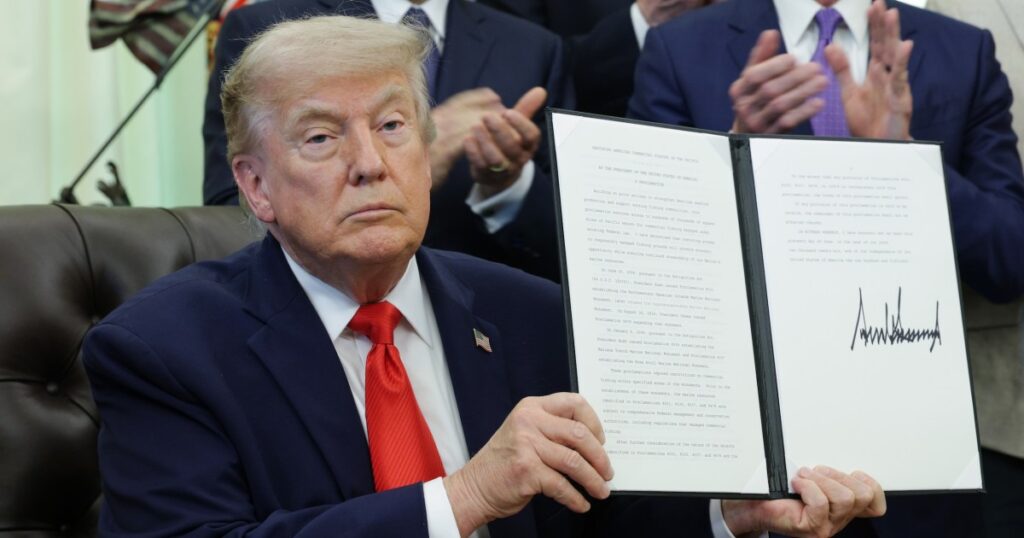
Although the complete text has not yet been officially published, multiple diplomatic and media reports indicate that the agreement contains several key provisions.
First, Iran would commit not to pursue nuclear weapons and would enter a new round of negotiations regarding its enriched uranium stockpile and nuclear activities.
Second, the Strait of Hormuz would be fully reopened to international shipping. Any restrictions or disruptions affecting commercial maritime traffic would be removed.
Third, the United States would lift its naval blockade and provide phased sanctions relief tied to Iranian compliance with the agreement.
Fourth, a 60-day ceasefire period would be implemented, creating space for broader negotiations concerning Iran’s nuclear program and regional security issues.
Fifth, discussions would continue regarding access to billions of dollars in Iranian assets currently frozen overseas. Reports suggest that some humanitarian-related funds could be released in stages while larger financial issues would remain linked to future compliance mechanisms.
Several reports also indicate that international monitoring and verification mechanisms involving the International Atomic Energy Agency (IAEA) could play a role in future implementation phases.
HOW IRAN BENEFITS
For Tehran, the agreement could provide substantial economic and strategic benefits.
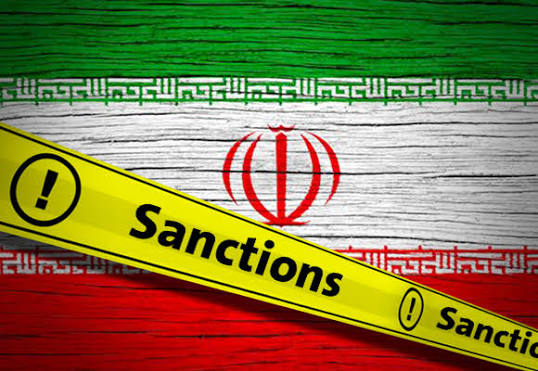
The most immediate advantage would be relief from sanctions that have severely constrained Iran’s economy for years. Increased oil exports could generate billions of dollars in additional revenue.
The reopening of international shipping routes would also reduce economic pressure and restore confidence among international trading partners.
Potential access to frozen overseas assets could provide much-needed financial resources for domestic economic stabilization and humanitarian programs.
Politically, Iranian leaders can argue that they secured negotiations without formally surrendering their right to maintain a civilian nuclear program, a long-standing national priority.
Supporters within Iran also contend that the agreement helps end a costly period of military confrontation while preserving national sovereignty.
However, hardline factions inside Iran have criticized the deal, arguing that Tehran may be conceding too much without receiving sufficient guarantees regarding sanctions relief and economic compensation.
HOW TRUMP BENEFITS
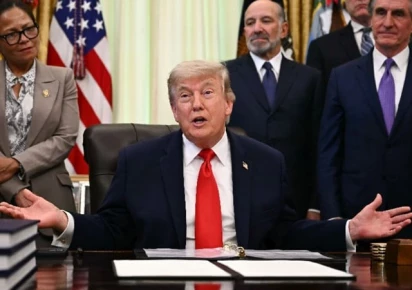
For President Donald Trump, the agreement offers significant political and diplomatic advantages.
The Trump administration can present the deal as evidence that a tougher approach toward Iran produced results that previous administrations failed to achieve.
Trump has long criticized the 2015 Iran nuclear agreement negotiated during the Obama administration. His supporters argue that the new framework includes stronger commitments regarding Iran’s nuclear ambitions and regional activities.
The deal also arrives at an important political moment as the United States approaches key electoral contests. Ending a costly regional conflict while helping stabilize global energy markets could strengthen Trump’s domestic standing.
Financial markets reacted positively to news of the agreement, with global stock markets rising and oil prices falling sharply amid expectations of improved regional stability.

THE TRUMP BIRTHDAY CONNECTION
A curious controversy emerged surrounding reports that Iran was being pressured to sign the agreement on June 14, coinciding with President Trump’s birthday.
Several media reports suggested that Tehran resisted any perception that the signing ceremony would be framed as a symbolic birthday gift for the U.S. president.
Iranian officials reportedly rejected the notion that the timing of the agreement should be associated with Trump’s personal celebrations, emphasizing instead that any accord would be signed according to diplomatic requirements and national interests.
While the issue generated considerable media attention, no official agreement appears to have been formally designated as a birthday-related diplomatic gesture.
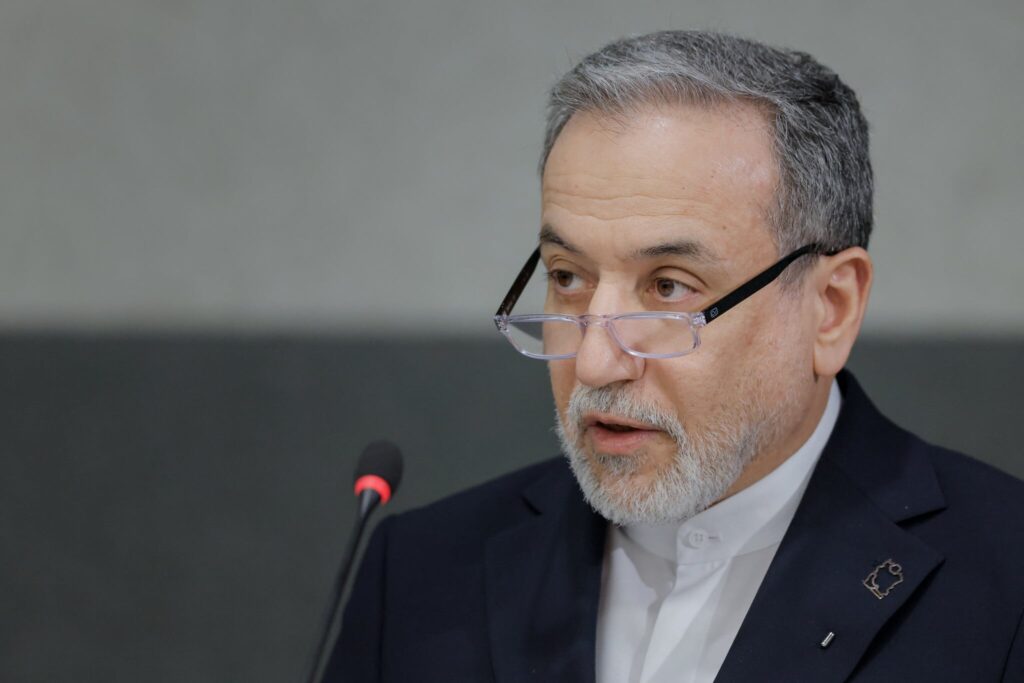
The final signing ceremony is expected to involve senior representatives from both governments.
On the Iranian side, Foreign Minister Abbas Araghchi has played a leading role in negotiations.
On the American side, special envoys working under President Trump, including senior diplomatic representatives, have been deeply involved in the talks.
Pakistan and Qatar have served as key mediators throughout the process and are expected to be represented during the formal signing ceremony.
Several reports indicate that the signing could take place in Geneva, Switzerland, although final logistical details remain under discussion.
GLOBAL REACTION
The international response has been largely positive.
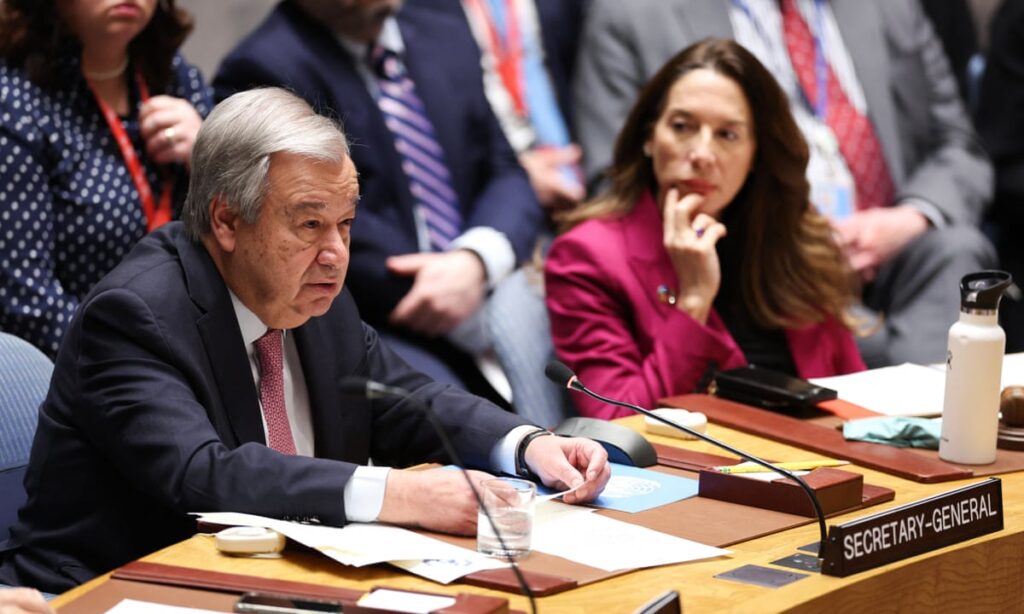
United Nations Secretary-General António Guterres welcomed the agreement as an important step toward peaceful conflict resolution.
European leaders, including officials from Britain, France, Germany, and Italy, praised the diplomatic breakthrough while emphasizing that Iran must never acquire nuclear weapons.
Australia and New Zealand also expressed support, describing the agreement as a positive development for global security.
Japan welcomed the reopening of maritime routes, highlighting the importance of stable energy supplies and international trade.
Financial markets responded enthusiastically. Global stock indices rose while oil prices declined significantly, reflecting investor confidence that regional tensions may ease.
Nevertheless, skepticism remains.
Critics in both Washington and Tehran have questioned whether the agreement contains sufficient safeguards and whether both sides will fully comply with their commitment’s.
The next phase will be critical.
The proposed 60-day ceasefire period will serve as a testing ground for trust and implementation.
Negotiators are expected to launch more detailed discussions regarding Iran’s uranium enrichment activities, nuclear inspections, sanctions relief, and regional security arrangements.
International observers will closely monitor compliance from both sides.
If implementation proceeds successfully, the agreement could evolve into a broader long-term settlement addressing some of the most contentious issues in U.S.–Iran relations.
If talks collapse, however, the region could quickly return to confrontation.
For now, the agreement represents the most significant diplomatic opening between Washington and Tehran in years and could reshape the geopolitical landscape of the Middle East, global energy markets, and international diplomacy for years to come.
By Paris Telegraph International News Desk

Paris Telegraph is an independent France-based digital news platform covering Paris news, French politics, European affairs, global business, diplomacy and artificial intelligence.
Publishing timely reporting and in-depth analysis, Paris Telegraph provides international perspectives on geopolitics, economic developments, technology innovation and cultural trends shaping Europe and the world.
As a growing online media outlet, Paris Telegraph is committed to credible journalism, global insight and forward-looking analysis for readers seeking reliable news from Paris and beyond.