
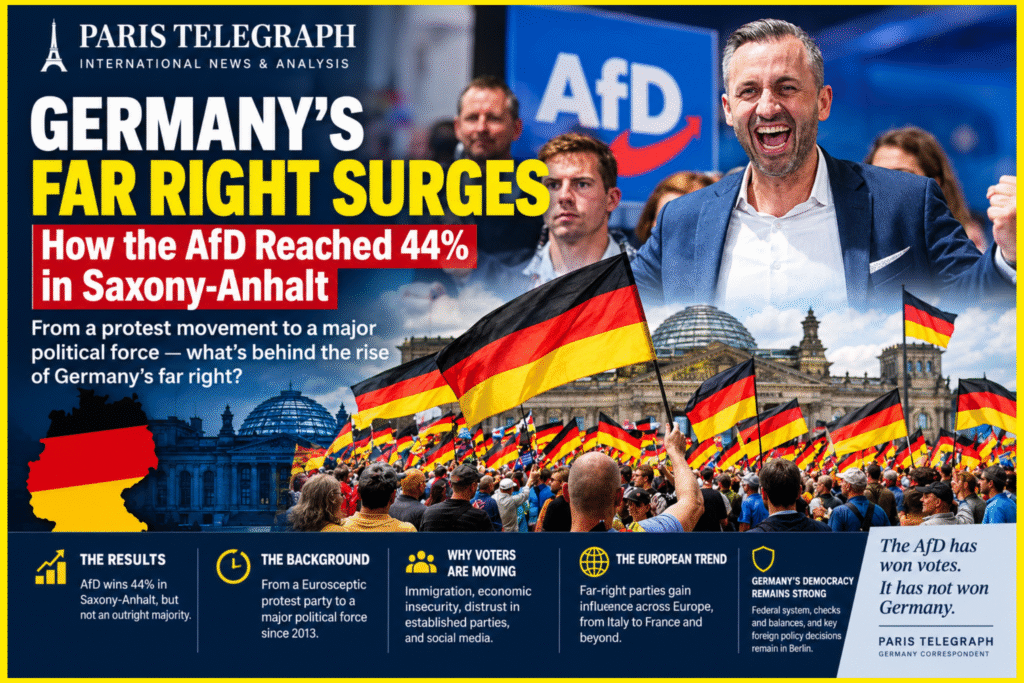
Germany’s Far-Right Surge: How the AfD Went From Protest Party to Electoral Power
By Paris Telegraph — Germany Correspondent
Berlin | September 2026
Germany has entered a new and uncomfortable phase in its post-war political history.
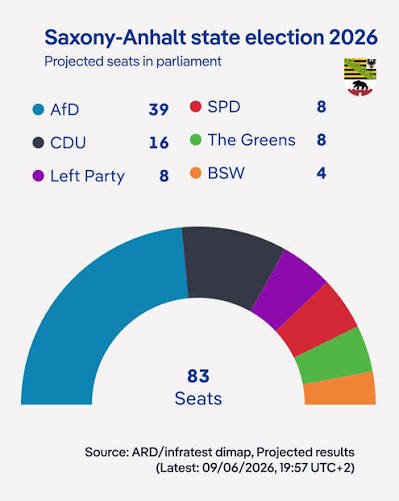
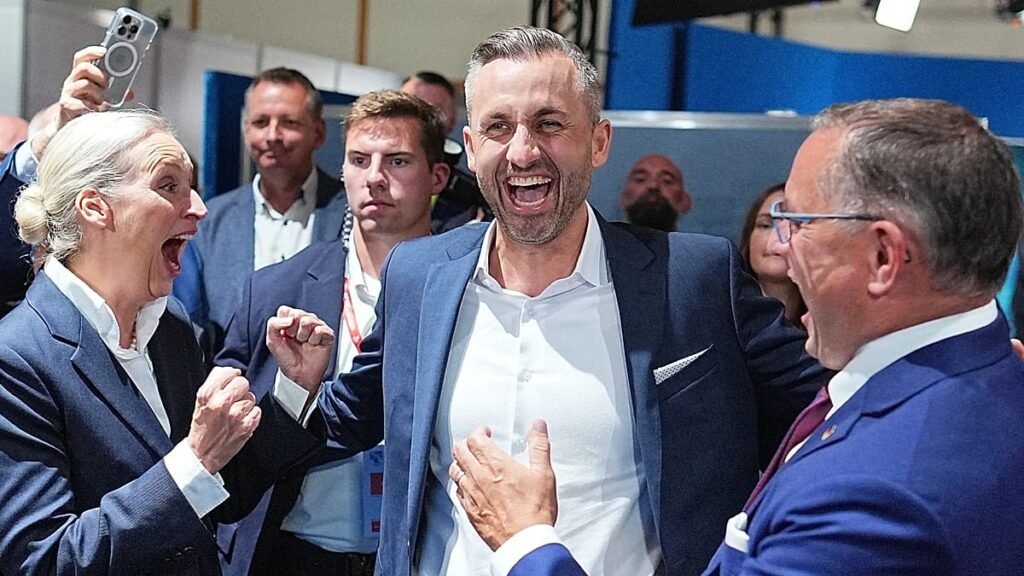
The Alternative for Germany — AfD — has achieved its strongest electoral breakthrough yet, winning about 44% of the vote in Saxony-Anhalt’s state election. The result is historic: a party described by German authorities and political researchers as having developed from a Eurosceptic movement into a radical right-wing and, in parts, far-right political force has become the largest political force in a German state election.
But one distinction is essential.
Germany has not become an AfD-run country. Nor has the AfD won an outright majority of the German parliament.
What has changed is perhaps more significant in another way: the political barrier separating the far right from the centre of electoral politics has become considerably weaker.
And that raises a difficult question for Germany and Europe:
Why are increasing numbers of voters — including younger voters — prepared to vote for a party that was once considered politically marginal?
From Euro protest to the politics of identity
The AfD was founded in 2013, during the European debt and euro crisis.
Its original political identity was very different from the party seen today. It was primarily Eurosceptic, economically liberal and opposed to the European rescue mechanisms created during the eurozone crisis.
The transformation came gradually.
After the migration crisis of 2015, immigration and asylum became increasingly central to the party’s political message. Internal struggles pushed the organisation further towards nationalist, anti-immigration and increasingly radical positions.
Germany’s Federal Agency for Civic Education describes the AfD’s evolution as a movement from liberal-conservative and Eurosceptic beginnings towards a right-populist and, in parts, right-extremist party.
The political transformation was accompanied by a transformation in its electorate.
The AfD discovered that immigration was not simply an issue of border policy. It could become a vehicle through which voters expressed broader dissatisfaction — with government institutions, economic insecurity, the European Union, cultural change, the political establishment and what many voters perceive as a loss of control.
2017: The breakthrough
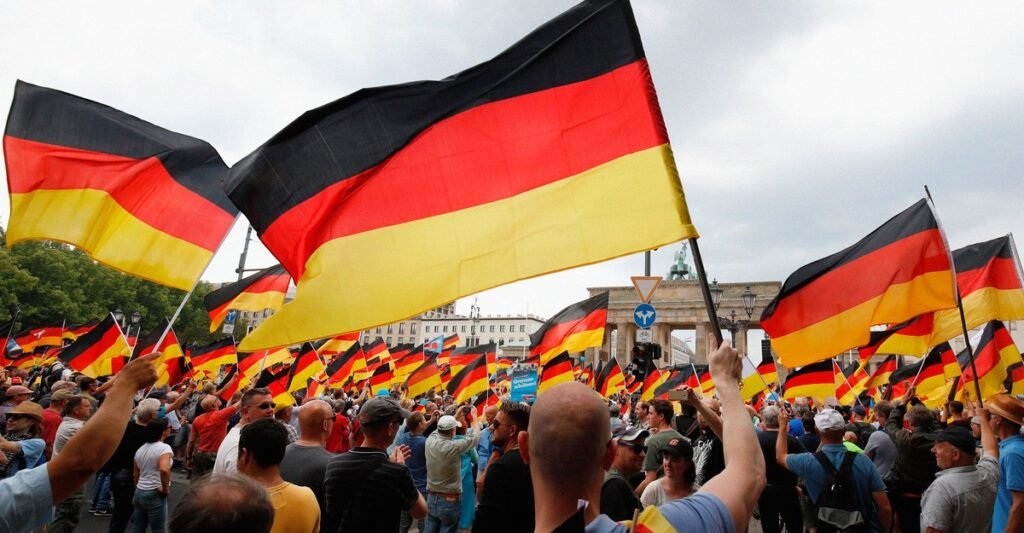
The AfD entered the Bundestag for the first time in 2017.
At that point, Germany’s established parties largely treated it as an opposition force that could be contained through political isolation.
That strategy worked electorally for a time — but it did not eliminate the underlying grievances that had produced the AfD’s support.
Economic uncertainty, dissatisfaction with traditional parties, migration, the energy transition, the war in Ukraine and the rising cost of living subsequently created new opportunities for the party.
The COVID-19 pandemic and later inflation added another layer of distrust in political institutions.
The AfD increasingly presented itself not merely as another political party but as the vehicle for voters who believed that the political system was ignoring them.
2025: The AfD becomes Germany’s second-largest political force
The federal election of February 2025 demonstrated how far the party had travelled.
The AfD won 20.8% of the second vote, almost double its 2021 result of 10.4%, becoming the second-largest parliamentary force with 152 seats.
The CDU remained the largest party, while the SPD suffered a major decline.
That result was not a takeover of Germany.
It was something more complicated.
The AfD had become too large to dismiss — but still lacked the parliamentary strength and coalition partners necessary to govern nationally.
Germany’s established parties have continued to reject coalition cooperation with the AfD.
That political isolation remains one of the most important barriers between electoral success and actual governmental power.
Saxony-Anhalt: the breakthrough that changed the conversation
The September 2026 election in Saxony-Anhalt has now pushed the question much further.
The AfD received approximately 44%, its strongest result in a German state election.
This is a political earthquake.
But it is important not to confuse winning an election with automatically forming a government.
Germany’s parliamentary system requires governing majorities. Other parties have so far refused cooperation with the AfD, meaning that coalition negotiations, minority-government possibilities and parliamentary arrangements will determine what happens next.
The AfD can therefore win an extraordinary electoral mandate without automatically acquiring unrestricted governing power.
That distinction is fundamental to understanding German democracy.
Why are voters moving towards the AfD?
There is no single explanation.
The strongest interpretation is that the AfD has successfully combined several different sources of dissatisfaction.
1. Immigration and identity
Migration remains one of the party’s most powerful political issues.
The AfD argues that Germany has lost control of immigration and demands much tougher restrictions.
For some voters, immigration is primarily an economic or security issue.
For others, it has become a question of national identity and cultural change.
2. Economic insecurity
Parts of eastern Germany continue to experience lower incomes, demographic decline and population loss.
Saxony-Anhalt is particularly vulnerable to these pressures.
Research published after the election points to economic insecurity, depopulation, weaker communities and fears surrounding industrial transformation as important elements behind the AfD’s support.
The transition towards electric vehicles, global competition and Germany’s wider industrial difficulties have also created anxiety in communities that historically depended on manufacturing.
3. Distrust of established parties
Perhaps the most important factor is political fatigue.
Some voters are not necessarily enthusiastic about every element of the AfD programme.
Instead, they are voting against the political establishment.
The AfD has become particularly effective at telling voters:
“The other parties have failed you. We are the alternative.”
That message is powerful during periods of uncertainty.
4. Social media and political mobilisation
The political environment has changed dramatically since the AfD was founded.
Younger voters increasingly encounter politics through TikTok, Instagram, YouTube, X and other digital platforms rather than traditional newspapers or television.
Short, emotional political messages can travel much faster than complex policy explanations.
The AfD has developed a strong digital mobilisation strategy, while traditional parties have struggled to communicate with parts of the younger electorate in the same emotional language. Germany’s Federal Agency for Civic Education notes the party’s strong mobilisation through social media.
Why are young people attracted to the far right?
This deserves particular attention.
It would be misleading to suggest that young Germans as a whole are becoming far-right.
They are not.
But the fact that radical-right parties can now attract significant numbers of younger voters represents a major political warning sign.
Young people entering adulthood today have grown up through a succession of crises:
- the financial and euro crises;
- the migration crisis;
- terrorism and security fears;
- COVID-19;
- inflation;
- the war in Ukraine;
- energy insecurity;
- housing pressures;
- climate and industrial transformation;
- and increasing distrust in political institutions.
For some young voters, traditional political language appears disconnected from their everyday experience.
The far right offers something different: simple explanations, strong identity, confrontation and a clear definition of who is responsible.
That does not make its arguments correct.
But it helps explain their political effectiveness.
The Elon Musk factor
The AfD’s growing international visibility has also changed the political environment.
In February 2025, Elon Musk contacted AfD co-leader Alice Weidel and congratulated her after the party’s strong federal election performance. Musk had already intervened publicly in German political debate and expressed support for the party.
Musk’s involvement matters because he is not simply a businessman with a conventional corporate profile.
He owns or controls major technology and communications interests and has become an influential political voice reaching millions of people directly.
His support gave the AfD additional international visibility and helped demonstrate that Germany’s far-right debate was no longer confined to Germany.
Other prominent political figures and movements on the international right have also celebrated the AfD’s successes.
But this should not be interpreted as evidence that foreign personalities created the AfD’s electoral support.
The underlying causes are domestic.
External endorsements can amplify a movement; they do not manufacture millions of votes from nothing.
Germany is not Italy — and Saxony-Anhalt is not Berlin
There is another important misunderstanding surrounding the current debate.
A state election in Germany does not give a regional government control over Germany’s foreign policy.
Germany is a federal republic.
Under the Basic Law, the Länder exercise substantial powers, but foreign relations are conducted by the Federation, while foreign affairs and defence are among the federal government’s exclusive legislative responsibilities.
State governments are heavily involved in areas such as education, regional administration, infrastructure and other Länder responsibilities.
Therefore, an AfD victory in Saxony-Anhalt does not mean that Germany is withdrawing from NATO, abandoning the European Union or changing its national foreign policy overnight.
Those decisions remain fundamentally federal matters.
But the national implications are real
That does not mean the Saxony-Anhalt result is insignificant.
Quite the opposite.
State elections increasingly function as political indicators of the national mood.
A 44% result demonstrates that the AfD can mobilise a huge electorate in an established democratic election.
It also places enormous pressure on Germany’s mainstream parties.
If voters believe the established parties are failing to address immigration, economic insecurity, bureaucracy, public services or regional inequality, the AfD can continue to expand.
The danger for the centre is therefore not simply that voters suddenly become extremists.
It is that ordinary political dissatisfaction becomes permanently attached to an extremist political vehicle.
A wider European phenomenon
Germany is not experiencing this political shift in isolation.
Across Europe, right-wing and far-right parties have gained influence.
Italy is governed by Giorgia Meloni’s right-wing coalition.
France’s Rassemblement National remains one of the country’s strongest political forces.
In Britain, Reform UK has reshaped the political debate around immigration and national sovereignty.
In Sweden, the Sweden Democrats have exerted significant influence over government policy.
In several other European countries, nationalist and anti-immigration parties have either entered government, supported governments or become major opposition forces.
The political trend is therefore broader than Germany.
But it is also not an unstoppable march.
Europe has seen counterexamples, electoral defeats and political fragmentation among right-wing movements as well.
The European political landscape is moving — but it is not moving uniformly in one direction.
What happens next in Germany?
The immediate question is not whether Germany has suddenly become a far-right country.
It has not.
The immediate question is whether Germany’s traditional democratic parties can understand why millions of voters are willing to support the AfD and whether they can address legitimate concerns without adopting extremist solutions.
There is a delicate balance.
Ignoring voters’ concerns about migration, security, economic decline and public services can strengthen the far right.
But simply copying far-right rhetoric can also legitimise the very political forces mainstream parties are attempting to contain.
Germany’s constitutional system was deliberately designed after the experience of Nazism to prevent unlimited political power.
Federalism, parliament, constitutional protections, independent institutions and the division of powers create multiple barriers against the concentration of authority.
Those safeguards remain important.
But democratic institutions cannot survive on constitutional mechanisms alone.
They also depend upon citizens believing that democracy can deliver.
The real warning from Saxony-Anhalt
The most important lesson from this election may therefore be neither “Germany has become far-right” nor “nothing has changed.”
Both statements would be too simplistic.
Something significant has changed.
A party that began in 2013 as a Eurosceptic protest movement has become a major political force.
A party once considered impossible to imagine as a serious governing contender is now openly discussing its path to power.
Young voters are no longer automatically outside the reach of radical-right politics.
And political movements across Europe are watching Germany closely.
At the same time, Germany’s democratic system remains functioning, competitive and institutionally resilient.
The AfD has won votes.
It has not won Germany.
The real struggle now is over something deeper than a single election:
Can Germany’s democratic centre regain the trust of voters who feel economically insecure, politically ignored and culturally displaced — without sacrificing the liberal democratic principles that the post-war German Republic was built to protect?
That may be the decisive political question for Germany before the next federal election.
And increasingly, it is a question for Europe as well.
Paris Telegraph — Germany Correspondent
Berlin

Paris Telegraph is an independent France-based digital news platform covering Paris news, French politics, European affairs, global business, diplomacy and artificial intelligence.
Publishing timely reporting and in-depth analysis, Paris Telegraph provides international perspectives on geopolitics, economic developments, technology innovation and cultural trends shaping Europe and the world.
As a growing online media outlet, Paris Telegraph is committed to credible journalism, global insight and forward-looking analysis for readers seeking reliable news from Paris and beyond.