
Historic gains give Democrats control of Congress, but the result is a warning to Republicans—and a test Democrats must now pass.
WASHINGTON, 6 November 2026
Democrats have won control of both chambers of Congress, turning Tuesday’s midterm elections into a sweeping rebuke of President Donald Trump and his party. They flipped at least seven Senate seats and more than two dozen House districts, including races in states that had backed Trump in 2024. The result gives Democrats power to block legislation and nominees and to investigate the administration, though Trump retains his veto.
The scale of the reversal is striking. Republicans entered the election with majorities in both chambers and a formidable fundraising and advertising operation. Yet voters who had helped return Trump to the White House two years ago shifted toward Democrats in states including Kansas, Texas, Iowa and South Carolina. That swing points to a broader judgment about the administration’s performance: voters felt that the promises made to improve their lives had not been met.
When household costs become a verdict
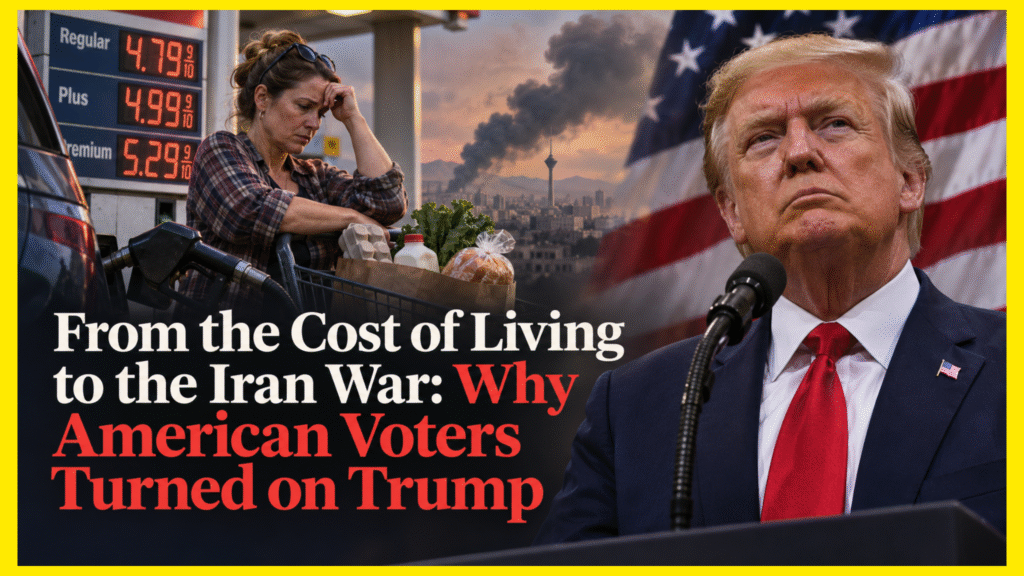
Affordability was central to that judgment. High prices, fuel costs and worries about healthcare and economic security shaped how many voters assessed the party in power. The Iran war added to those pressures. The Pentagon’s estimate put the conflict’s cost to taxpayers at $47.1 billion as of 16 October. Its figures listed 21 service-member deaths and 865 wounded, while noting that not all deaths were directly connected to combat.
The war’s economic effects reached far beyond Washington. Disruption to energy markets pushed up fuel costs, adding pressure for households already concerned about the cost of living. Polling before Election Day found that voters ranked the economy, healthcare and the situation in Iran among their leading concerns.
The election does not prove that voters opposed every aspect of Trump’s foreign policy. It does show that an overseas conflict became inseparable from questions at home: what the war costs, who bears those costs, and whether the administration is giving enough attention to people’s daily needs. For many voters, the choice was not an abstract debate about America’s role in the world. It was a judgment made alongside the price of fuel, medical care and groceries.
Immigration enforcement weakened Trump’s coalition
Trump’s hard-line immigration agenda also became a political liability. In interviews with Latino voters, Reuters found that concern about aggressive enforcement and the cost of living both helped drive support for Democratic candidates. Its analysis found a marked shift toward Democrats in heavily Latino counties, including in places where workplace raids had affected immigrant communities.
That shift matters because Trump had made gains among Latino voters in 2024. This year, families and communities that had been drawn to his economic message were also confronting the consequences of the administration’s enforcement policies. When people see neighbours detained or workplaces disrupted, immigration stops being a distant campaign issue. It becomes part of everyday community life.
The result was not simply a vote by immigrants. Immigrants who are not U.S. citizens cannot vote in federal elections. Rather, many American citizens—including Latino voters and voters from other immigrant-background communities—responded to policies affecting their families, workplaces and neighbourhoods. The distinction matters: this was a diverse electorate exercising political power, not one community voting as a single bloc.
A changing face of political leadership
The victories also brought a series of historic firsts. Abdul El-Sayed, the son of Egyptian immigrants, became the first Muslim elected to the U.S. Senate. Gina Hinojosa became Texas’s first Latina governor, and Melat Kiros, born in Ethiopia and raised in the United States, became the first Black woman elected to Congress from Colorado. Other wins included the first Native American woman elected governor and the first openly gay man elected to the Senate.
These milestones do not mean every candidate came from the same background, held the same views or was elected for the same reason. They do show that American political leadership is becoming more representative of the country’s varied communities. In a separate city election, India-born councilmember Nithya Raman defeated Los Angeles Mayor Karen Bass, adding another prominent example of that shift.
Representation alone, however, does not explain the Democratic sweep. Voters were choosing candidates and making judgments about the administration. The historic wins give communities new visibility in government; the challenge now is to turn that visibility into policies that improve people’s lives.
Money bought reach, not a guaranteed result
Campaign spending was enormous, but money did not settle the election. AdImpact’s figures put total advertising spending at about $11.87 billion. Republicans spent more on ads overall—about $5.45 billion, compared with $5.02 billion for Democrats.
You mentioned “APEC”; I’ve interpreted that as AIPAC, the American Israel Public Affairs Committee. AIPAC and its affiliated United Democracy Project were major political spenders, including in high-profile races. But their spending was part of the wider campaign-finance picture, not the whole Republican or Trump fundraising operation. AIPAC’s spending should also not be confused with total campaign spending by either party.
The Michigan Senate race offered a sharp example of money’s limits: El-Sayed won despite being significantly outspent. Spending can buy advertising and attention. It cannot, by itself, persuade voters that their costs are falling, that a war is worth its price, or that enforcement policies are serving the country. The result does not make campaign money irrelevant; it shows that money alone cannot override widespread dissatisfaction.
A lesson for Republicans—and a test for Democrats
Republicans face a difficult question: why did voters who had backed Trump two years ago turn away from his party so quickly? The answer is unlikely to be one issue. Economic frustration, fuel prices, the Iran war, immigration enforcement and concerns about the country’s direction combined into a verdict against the governing party.
For Democrats, victory is not a blank cheque. The new majority will have to respond to the concerns that helped bring it to power: lower costs, access to healthcare, economic security and a clearer account of America’s commitments abroad. It will also have to manage a broad coalition, from moderates who flipped Republican districts to progressives who won high-profile races. The party’s own future direction remains contested.
The election is therefore historic in two ways: it has reshaped control of Congress, and it has widened the range of communities represented in national politics. But the deeper message is practical. Voters can reward a party for promises and remove it when they believe those promises have not improved daily life. For Republicans, this is a warning. For Democrats, it is an obligation to govern.
By Paris Telegraph International News Desk


Paris Telegraph is an independent France-based digital news platform covering Paris news, French politics, European affairs, global business, diplomacy and artificial intelligence.
Publishing timely reporting and in-depth analysis, Paris Telegraph provides international perspectives on geopolitics, economic developments, technology innovation and cultural trends shaping Europe and the world.
As a growing online media outlet, Paris Telegraph is committed to credible journalism, global insight and forward-looking analysis for readers seeking reliable news from Paris and beyond.