
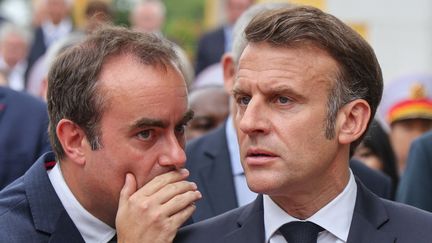
France in Turmoil: Macron’s Government Survives Budget Clash After Invoking Controversial 49.3 Law
Paris — January 26, 2026 — France is navigating one of its most turbulent political moments in years as Prime Minister Sébastien Lecornu and President Emmanuel Macron push through the year’s crucial national budget using the controversial Article 49.3 of the French Constitution, bypassing parliamentary votes after months of deadlock.
In a dramatic political showdown this week, Lecornu invoked Article 49.3 — a constitutional tool that allows the government to force legislation through the National Assembly without a full vote — to adopt key sections of the 2026 budget bill after discussions collapsed in a deeply divided legislature.
What Is Article 49.3? The “No-Vote” Law
Article 49.3, often dubbed the “nuclear option” of the Fifth Republic, empowers the government to adopt a bill without a parliamentary vote — unless a majority in the Assembly passes a motion of no confidence within 24 hours. It was designed to prevent legislative paralysis but has become symbolic of executive dominance in times of fractious politics.
Traditionally reserved for urgent or unsustainable stalemates, 49.3’s use has surged in recent years — with 115 uses since 1958, and a particularly heavy reliance under former Prime Minister Élisabeth Borne.
For budget laws, the Constitution allows repeated use during the budget’s passage — meaning Lecornu must invoke it at least three times to adopt the full 2026 finance law in its revenue, spending, and final form after Senate scrutiny.
A Divided Parliament and Failed No-Confidence Votes
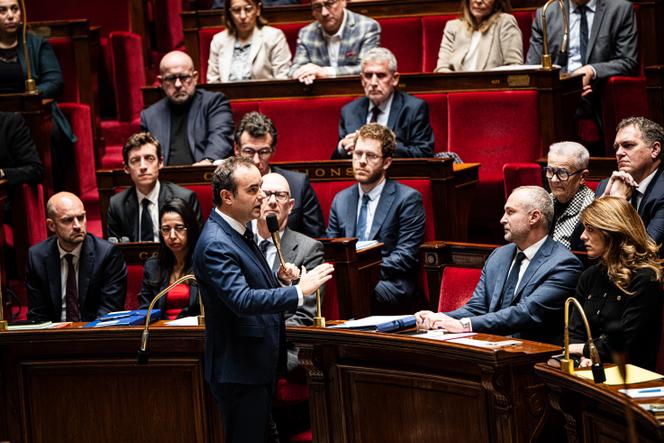
The opposition responded fiercely to Lecornu’s move. Two distinct motions of no confidence were tabled — one by the hard-left La France Insoumise (LFI) and another by the far-right Rassemblement National (RN) — arguing that the government had trampled democratic norms to push through a budget they oppose.
Yet both motions were resoundingly defeated, with Socialist and moderate conservative deputies refusing to support them, leaving the government intact and the prime minister firmly in place.
Economic Stakes: Deficits, Deflation, and EU Rules
France’s current budget crisis is not just political — it’s deeply economic. The country is working to reduce its fiscal deficit from around 5.4% of GDP in 2025 to below the EU’s 3% target, a difficult balancing act in the face of slowing growth, rising living costs, and broader global economic pressures.
Opposition figures have argued that the budget’s austerity and lack of consensus risk hurting public services and household purchasing power, while centrist deputies have urged fiscal responsibility to reassure financial markets and EU partners. The government, for its part, has made some concessions — including targeted corporate tax adjustments — to stave off broader backlash.
Macron’s Legacy and the Broader Political Landscape
This latest crisis reflects a broader challenge for President Macron, now more than midway through his second term. Since losing his parliamentary majority after snap elections in 2024, his administration has struggled to form durable coalitions, relying increasingly on constitutional mechanisms rather than parliamentary consensus.
Critics from both left and right see this as symptomatic of a widening democratic disconnect — a view amplified by commentators who argue that repeated reliance on 49.3 undermines the spirit of representative debate.
Supporters of the government, however, insist the extraordinary measures were necessary to prevent political paralysis and ensure France’s economic stability — a message likely to resonate as municipal, senatorial, and even the looming 2027 presidential race approach.
A Crisis of Consensus — Not Just Budgets
France’s current political moment is defined by fractured politics, an economy under strain, and constitutional tools deployed in unprecedented ways. Whether Macron’s camp can convert constitutional survival into stable governance remains the central question of 2026 — with both the electorate and Europe watching closely.
For the full story as it unfolds and reactions from Paris to Brussels, stay tuned to Paris Telegraph’s political desk.

Paris Telegraph is an independent France-based digital news platform covering Paris news, French politics, European affairs, global business, diplomacy and artificial intelligence.
Publishing timely reporting and in-depth analysis, Paris Telegraph provides international perspectives on geopolitics, economic developments, technology innovation and cultural trends shaping Europe and the world.
As a growing online media outlet, Paris Telegraph is committed to credible journalism, global insight and forward-looking analysis for readers seeking reliable news from Paris and beyond.