
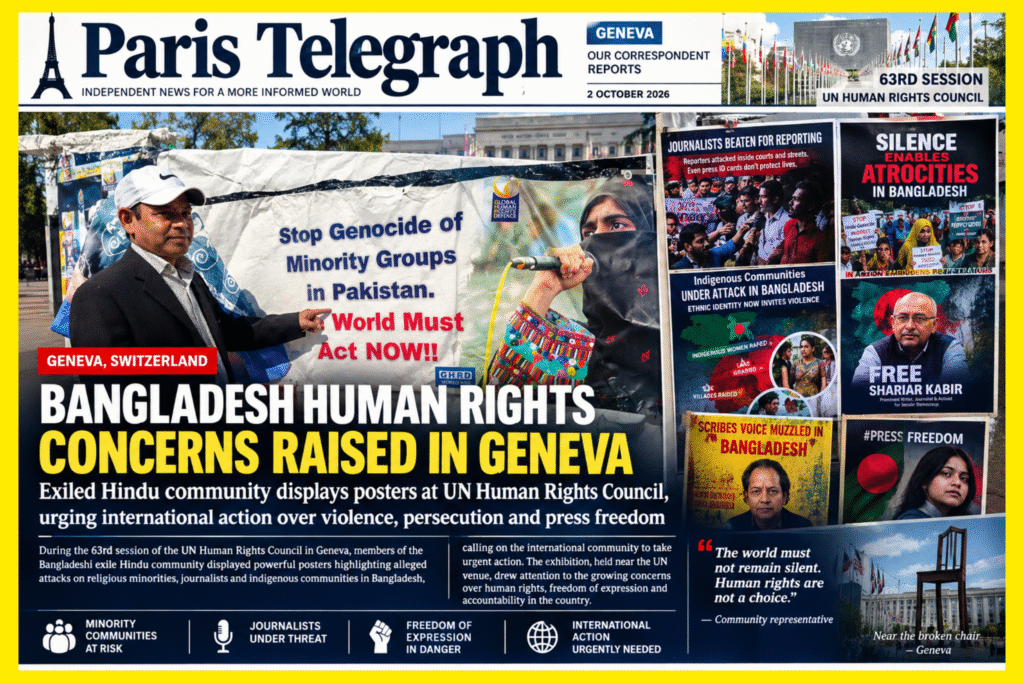
Bangladesh Human Rights Concerns Put on Display in Geneva During UN Human Rights Council Session
Geneva, October 2, 2026 — Paris Telegraph Geneva Correspondent
A series of posters highlighting alleged attacks against journalists, religious minorities and indigenous communities in Bangladesh has been displayed in Geneva during the 63rd session of the United Nations Human Rights Council (HRC), drawing attention to concerns over human rights and freedom of expression in the country.
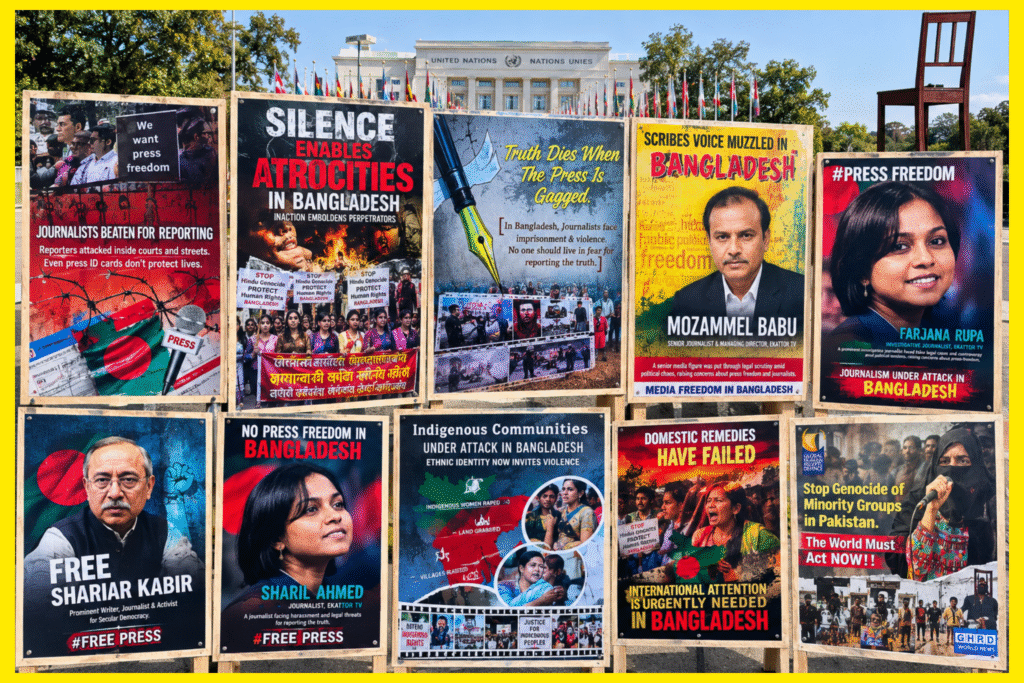
The exhibition, photographed near the United Nations complex in Geneva, includes large-format posters focusing particularly on the situation of Hindu and other minority communities in Bangladesh, as well as journalists facing alleged intimidation, violence, detention and legal pressure.
The 63rd session of the Human Rights Council is being held at the Palais des Nations from September 7 to October 7, 2026.
Posters highlight journalists and press freedom
Several of the displays focus on journalists. One poster carries the headline “Journalists Beaten for Reporting”, while another states “Truth Dies When the Press Is Gagged.”
The exhibition also features individual posters naming Bangladeshi journalists, including Mozammel Babu, Shakil Ahmed and Farjana Rupa, with messages calling for press freedom.
The concerns come amid continuing reports from media-monitoring organisations about attacks and legal harassment involving journalists in Bangladesh. A Media Initiative for Development report published on October 2 said 162 journalists were affected by physical attacks, threats, intimidation or legal harassment in 112 incidents between July and September 2026.
Reporters Without Borders (RSF) also currently reports that five journalists are detained in Bangladesh and says more than 130 journalists were subjected to judicial proceedings following the political upheaval after the fall of Sheikh Hasina’s government.
Minority communities at the centre of the exhibition
Other posters focus on Bangladesh’s Hindu, Buddhist, Christian and indigenous communities.
One display reads “Indigenous Communities Under Attack in Bangladesh”, with images and allegations concerning violence against indigenous people, including women, homes and villages.
Another poster uses the headline “Silence Enables Atrocities in Bangladesh” and calls for protection of minority communities.
Claims concerning violence against minorities have been made by several rights organisations, although the causes and scale of individual incidents are disputed and require case-by-case verification. The Bangladesh Hindu Buddhist Christian Unity Council reported 257 communal-violence incidents during the first six months of 2026, including 44 reported murders and attacks on religious sites. Those figures are the organisation’s own documentation and are not equivalent to a UN-verified total.
The European Union Agency for Asylum has also documented attacks against Hindu homes, businesses and places of worship following the 2024 political transition, while noting that some reporting surrounding attacks has been contested or exaggerated.
A message directed at the international community
One of the largest posters carries the message:
“International Attention Is Urgently Needed in Bangladesh”
and argues that domestic remedies have failed and that international engagement is necessary.
The displays therefore place several interconnected issues before the international community: protection of religious and ethnic minorities, journalist safety, freedom of expression, accountability for violence and access to justice.
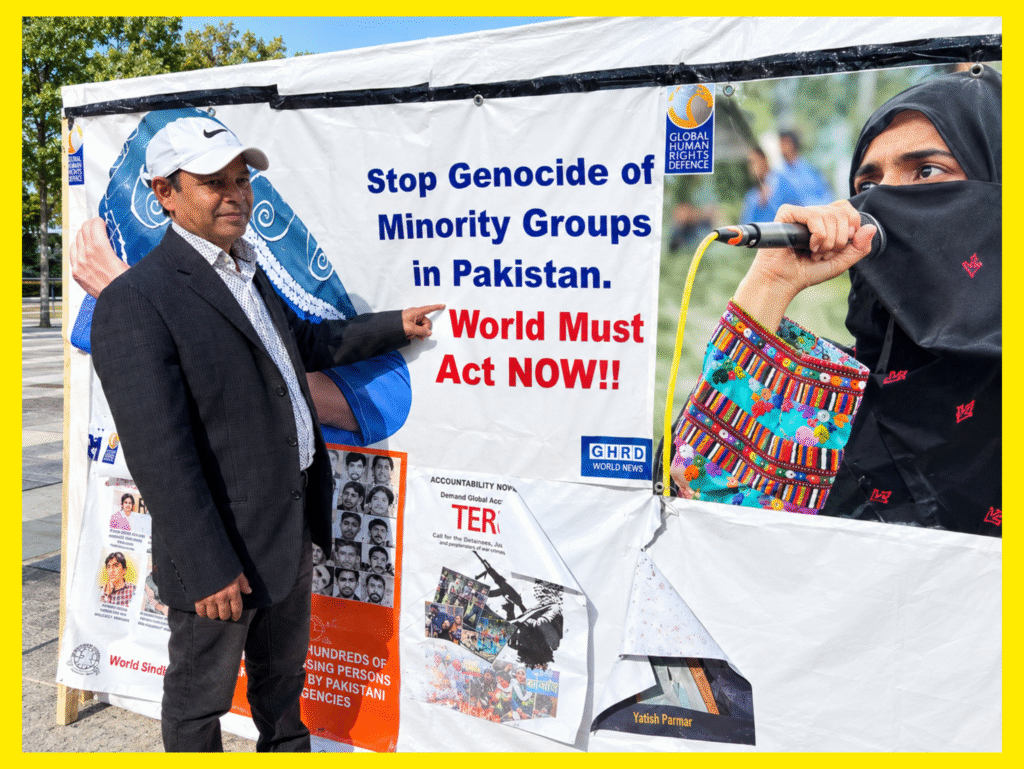
The exhibition does not itself constitute a finding by the United Nations that all of the allegations shown on the posters have been established. Rather, the posters represent the concerns and allegations being presented by their organisers and supporters in the international human-rights environment surrounding the Geneva session.
For observers attending the Human Rights Council, the exhibition provides a highly visual presentation of demands for greater international scrutiny of developments in Bangladesh.
Paris Telegraph observed the displays in Geneva on October 2 as the 63rd Human Rights Council session entered its final days.
Paris Télegraph Geneva Correspondent- Veroniq G

Paris Telegraph is an independent France-based digital news platform covering Paris news, French politics, European affairs, global business, diplomacy and artificial intelligence.
Publishing timely reporting and in-depth analysis, Paris Telegraph provides international perspectives on geopolitics, economic developments, technology innovation and cultural trends shaping Europe and the world.
As a growing online media outlet, Paris Telegraph is committed to credible journalism, global insight and forward-looking analysis for readers seeking reliable news from Paris and beyond.