
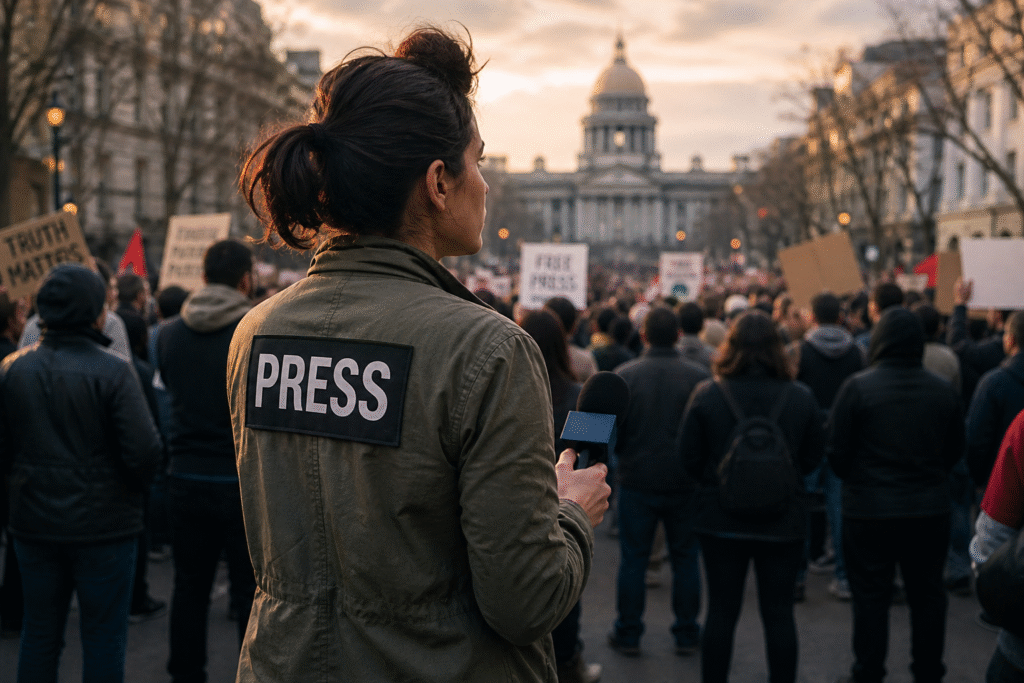
World Press Freedom Day 2026: The World Must Confront the Truth
Paris 03 May 2026 On World Press Freedom Day,
The global community is reminded of a principle that transcends borders: the right to seek, report, and access truth without fear. In 2026, that principle is under unprecedented strain—not in one country, but across the world.
This is no longer a regional concern. It is a global crisis.
Established by the United Nations and promoted by UNESCO, this day serves both as a tribute to journalists who have lost their lives and as a warning. Around the world, press freedom is being challenged by a combination of political control, economic pressure, technological disruption, and social polarization.
From authoritarian regimes to democratic nations, the methods may differ—but the outcome is increasingly similar: a shrinking space for independent journalism.
According to global watchdogs such as Reporters Without Borders, journalists face rising threats ranging from imprisonment and violence to legal intimidation and digital surveillance. Entire media outlets are being silenced, while others operate under constant pressure to conform or risk closure.
The dangers are no longer confined to conflict zones. Even in stable democracies, subtle forms of control are emerging—through restrictive legislation, concentration of media ownership, and growing hostility toward journalists. Self-censorship, driven by fear of legal or social repercussions, is becoming an invisible but powerful force.
The digital revolution has added a new and complex dimension. Information travels faster than ever before—but so does disinformation. Social media platforms have created an environment where false narratives can overshadow verified reporting within minutes. This not only undermines public trust but weakens the role of journalism as a pillar of accountability.
At the same time, journalists are increasingly targeted online. Coordinated harassment campaigns, threats, and abuse have become routine, particularly for those reporting on sensitive issues such as corruption, human rights, and conflict. The psychological toll is significant—and often overlooked.
The consequences of this global decline are profound. Without a free press, corruption flourishes, human rights abuses go unreported, and citizens are left without reliable information to make informed decisions. Democracy cannot function in the absence of truth.
Confronting this reality requires more than symbolic recognition. Governments must uphold and enforce protections for journalists, not undermine them. Technology companies must take responsibility for the information ecosystems they shape. Media organizations must remain committed to ethical reporting despite mounting pressures. And the public must actively support credible journalism and reject the normalization of misinformation.
On this World Press Freedom Day 2026, the message is clear: the erosion of press freedom anywhere is a threat to freedom everywhere.
The world must confront the truth—before the truth disappears.
Paris Telegraph is an independent France-based digital news platform covering Paris news, French politics, European affairs, global business, diplomacy and artificial intelligence.
Publishing timely reporting and in-depth analysis, Paris Telegraph provides international perspectives on geopolitics, economic developments, technology innovation and cultural trends shaping Europe and the world.
As a growing online media outlet, Paris Telegraph is committed to credible journalism, global insight and forward-looking analysis for readers seeking reliable news from Paris and beyond.