
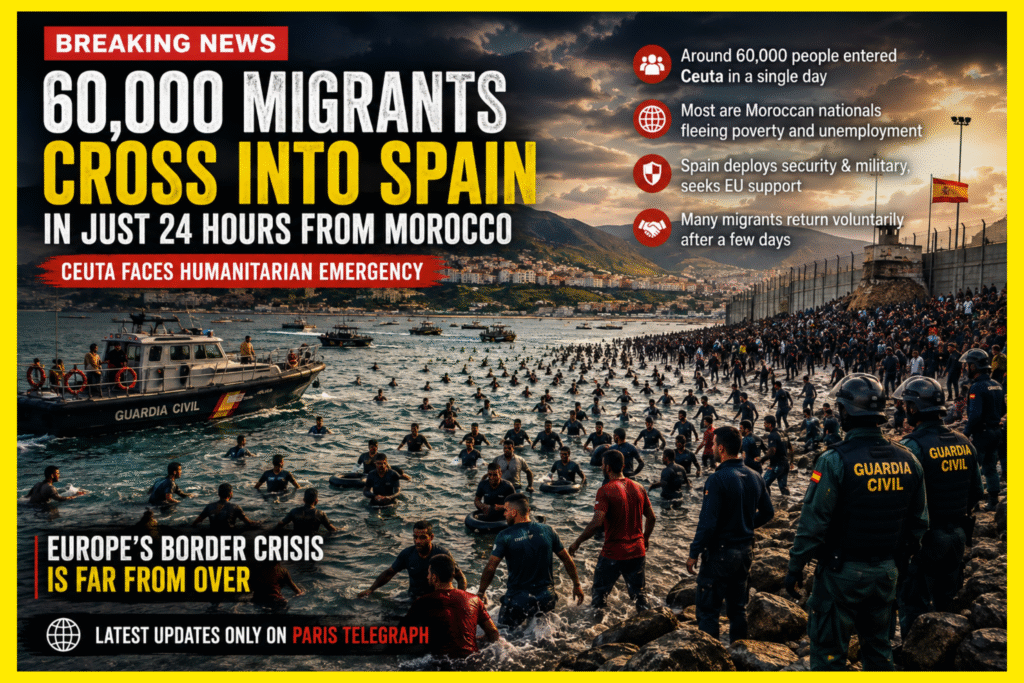
60,000 Migrants Cross into Spain as Ceuta Faces an Unprecedented Humanitarian Emergency.
PARIS TELEGRAPH. 01-08-2026
Europe is confronting one of its most significant migration emergencies in recent years after an estimated 50,000 to 60,000 people crossed from Morocco into the Spanish enclave of Ceuta within approximately 24 hours, overwhelming local authorities, straining humanitarian resources, and reigniting a fierce debate over border security, migration policy and relations between the European Union and Morocco.
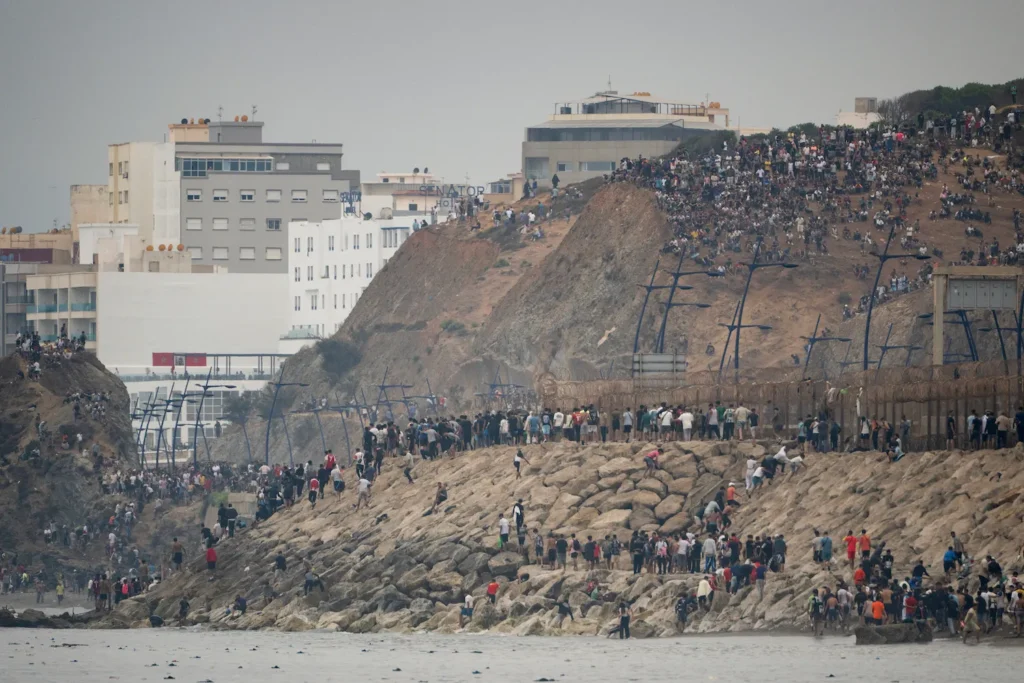
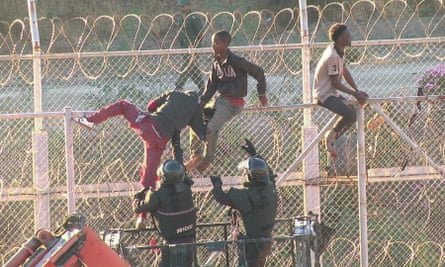
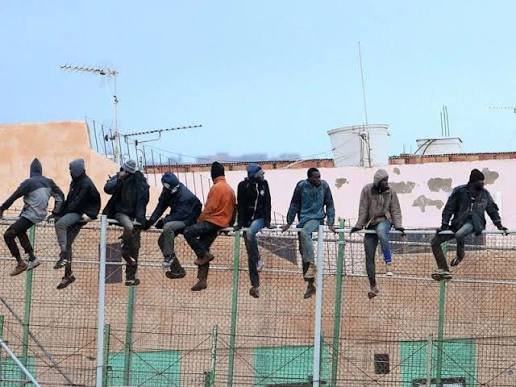
The extraordinary movement of people has transformed the small Spanish territory on the northern coast of Africa into the centre of international attention. Images of thousands of people swimming around breakwaters, climbing coastal barriers and gathering along the shoreline have circulated worldwide, raising urgent questions about Europe’s preparedness for sudden migration surges.
Spanish authorities declared an emergency as police, civil protection services and military personnel worked to manage the unprecedented influx. Temporary shelters quickly reached capacity, while emergency responders focused on providing food, water, medical assistance and accommodation to exhausted arrivals.
The humanitarian dimension of the crisis has been equally alarming. Reports indicate that several people lost their lives while attempting the dangerous sea crossing, highlighting once again the deadly risks associated with irregular migration across Europe’s external borders.
Who Are the Migrants?
Unlike previous migration waves involving large numbers of people from sub-Saharan Africa or the Middle East, officials and international media report that the majority of those entering Ceuta were Moroccan nationals.
Many were young adults who described years of economic hardship, unemployment and limited prospects as the main reasons for attempting the crossing. Others hoped that reaching Spanish territory would provide access to better education, employment opportunities and long-term stability within the European Union.
Families with children and teenagers were also among those arriving in Ceuta, although young men represented the largest group.
Migration experts note that Morocco has experienced persistent economic pressures in recent years, particularly among young people. Rising living costs, housing challenges and limited employment opportunities have contributed to growing frustration, making migration increasingly attractive despite the obvious dangers.
Why Did Thousands Cross So Suddenly?
Authorities are still investigating what triggered such a rapid and coordinated movement.
Several factors appear to have contributed simultaneously.
First, rumours spread rapidly through social media platforms and messaging applications claiming that Spanish authorities would be unable to return such a large number of migrants immediately. Some messages suggested that once individuals reached Spanish territory, they would eventually be transferred to mainland Spain.
Spanish officials believe misinformation may have encouraged many people to make spontaneous decisions without fully understanding Spain’s immigration procedures.
Law enforcement agencies are also investigating whether organised human trafficking networks played a role in encouraging or facilitating the crossings. Such criminal organisations have previously exploited vulnerable migrants by spreading false promises regarding asylum procedures and legal residency.
However, experts caution that social media rumours alone cannot explain the scale of the migration.
The deeper causes remain economic inequality, unemployment, and limited opportunities for young people. Migration specialists argue that these structural issues create conditions in which misinformation can spread rapidly among populations already desperate for change.
The Question Everyone Is Asking: Why Was the Border Not Stopped?
Perhaps the most politically sensitive question concerns the apparent lack of effective border enforcement during the mass crossing.
Observers have questioned why Moroccan border guards were unable—or unwilling—to prevent tens of thousands of people from approaching the Spanish frontier within such a short period.
At present, there is no official evidence confirming that Moroccan authorities deliberately allowed the crossings.
Several explanations have been discussed by analysts.
Some believe security forces were simply overwhelmed by the size and speed of the crowds. Others argue that operational failures, communication problems or logistical limitations may have reduced the effectiveness of border controls.
Political analysts have also suggested that the incident could place additional pressure on diplomatic relations between Rabat, Madrid and the European Union. However, these remain analyses rather than confirmed facts.
Both Spain and Morocco have continued diplomatic discussions while officials investigate exactly how the situation developed.
Spain Responds with Emergency Measures
The Spanish government responded rapidly.
Additional police officers and military personnel were deployed to Ceuta to restore order and strengthen border security.
Reception centres were expanded while emergency medical teams worked around the clock assisting exhausted migrants arriving from the sea.
Spanish authorities also reinforced maritime surveillance and installed additional protective measures along vulnerable sections of the coastline.
Prime Minister Pedro Sánchez described the protection of Spain’s borders as a national priority while emphasising that humanitarian obligations toward vulnerable people must continue to be respected.
Spain has also intensified cooperation with Moroccan authorities to manage returns in accordance with existing agreements and international law.
Europe Watches Closely
The events in Ceuta have immediate implications far beyond Spain.
As one of the European Union’s external borders, Ceuta represents a critical point in Europe’s migration system.
European policymakers are now expected to examine whether existing border management mechanisms are sufficient to respond to sudden mass migration events.
The crisis is also likely to influence ongoing discussions regarding the EU Migration and Asylum Pact, burden-sharing among member states and cooperation with neighbouring countries.
Human rights organisations have urged governments to prioritise the protection of life while ensuring that international refugee law continues to be respected.
At the same time, several European political leaders argue that stronger external border protection and increased cooperation with transit countries remain essential to prevent future crises.
A Humanitarian and Political Challenge
The events in Ceuta demonstrate how migration is rarely driven by a single factor.
Economic hardship, social inequality, misinformation, organised smuggling networks and geopolitical relationships all interact to create sudden humanitarian emergencies.
For thousands of young Moroccans, the crossing represented hope for a better future.
For Spain, it became one of the largest border management challenges in recent years.
For Europe, it serves as another reminder that migration cannot be addressed solely through security measures or humanitarian assistance. Long-term solutions will require economic cooperation, regional stability and coordinated international policies that address the root causes driving people to undertake dangerous journeys.
As investigations continue, governments on both sides of the Mediterranean will face increasing pressure to explain how such an unprecedented migration surge unfolded and what measures can prevent a similar crisis from occurring again.
The developments in Ceuta are likely to remain at the centre of European political debate in the coming weeks, influencing discussions on border security, migration policy and EU-Morocco relations for years to come.
Paris Telegraph News Desk

Paris Telegraph is an independent France-based digital news platform covering Paris news, French politics, European affairs, global business, diplomacy and artificial intelligence.
Publishing timely reporting and in-depth analysis, Paris Telegraph provides international perspectives on geopolitics, economic developments, technology innovation and cultural trends shaping Europe and the world.
As a growing online media outlet, Paris Telegraph is committed to credible journalism, global insight and forward-looking analysis for readers seeking reliable news from Paris and beyond.