
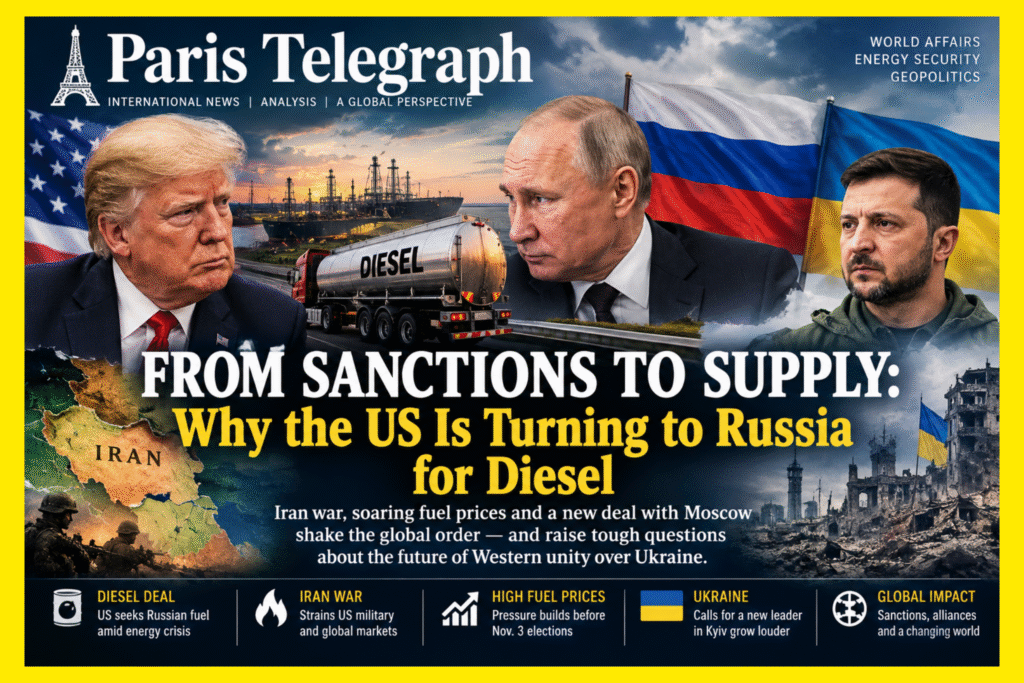
From Sanctions to Supply: Why Washington Is Turning to Russia for Diesel
The Iran war, soaring fuel costs and a controversial agreement with Vladimir Putin expose the limits of economic sanctions—and raise difficult questions about the future of Western unity over Ukraine.
By Hyder Editor Paris Telegraph
PARIS | 11 October 2026
The geopolitical landscape has taken a remarkable turn. The United States, which spent years trying to restrict Russia’s energy revenues following the invasion of Ukraine, is now seeking Russian diesel supplies to help ease a domestic fuel-price crisis.
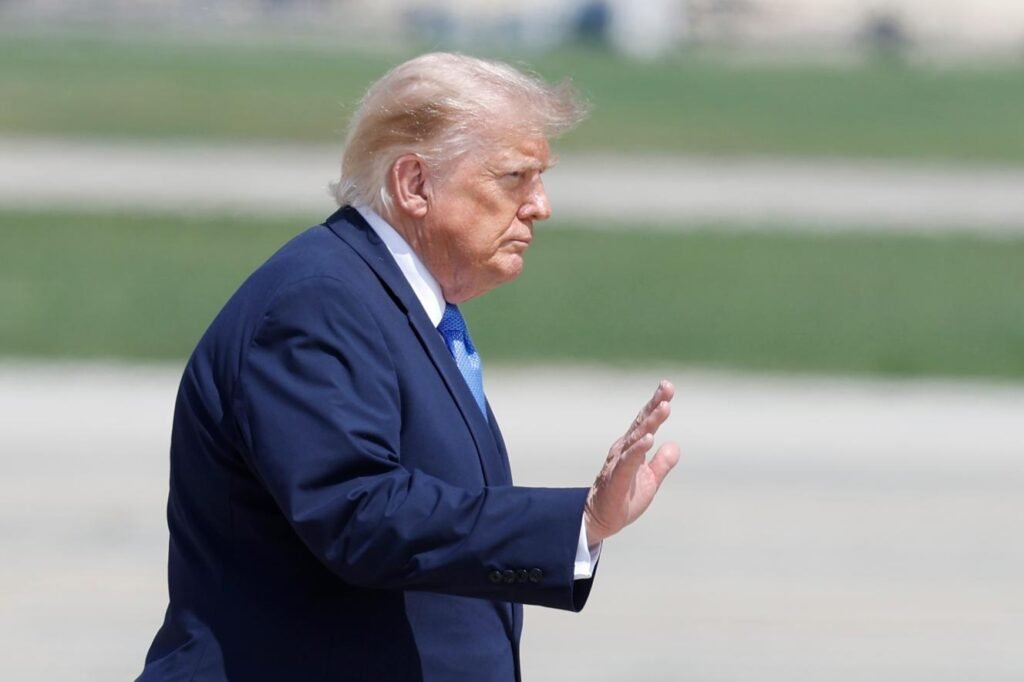
On 9 October, US President Donald Trump announced an agreement with Russian President Vladimir Putin under which Russia would supply more than 300,000 tonnes of diesel immediately, with further shipments planned. Washington also temporarily relaxed sanctions on Russian fuel to facilitate supplies. The announcement marks a striking reversal of the policy that sought to weaken Moscow’s capacity to finance its war against Ukraine. https://www.reuters.com/business/energy/trump-big-announcement-coming-up-diesel-2026-10-09/
The significance extends far beyond a shipment of fuel. It reveals how quickly economic pressure, domestic political calculations and energy insecurity can reshape the priorities of even the world’s most powerful country.
The question is no longer simply whether sanctions can hurt Russia. It is whether Washington can maintain those sanctions when the economic consequences begin to threaten its own political interests.
The world economy runs on diesel
Oil dominates headlines, but diesel is one of the essential fuels underpinning the global economy. It powers much of the road-freight industry, agricultural machinery, construction equipment and numerous industrial operations. It also supports essential supply chains that deliver food, manufactured goods and everyday necessities.
When diesel prices rise sharply, the impact travels far beyond filling stations. Transport companies face higher operating costs. Farmers pay more to plant and harvest crops. Manufacturers and distributors face additional expenses, which can eventually be passed on to consumers.
The result is an inflationary chain reaction.
The disruption associated with the Iran war has intensified pressure on global energy markets, particularly through its impact on shipping and refined-fuel supplies. In a July assessment, the International Monetary Fund described the disruption to oil flows through the Strait of Hormuz as exceptionally severe, with diesel and jet fuel among the products particularly affected by reduced Gulf-region output. https://www.imf.org/en/blogs/articles/2026/07/15/the-oil-market-absorbed-the-war-shock-but-buffers-are-running-low
This is why diesel has become a strategic concern rather than merely a consumer-price issue. A country may possess substantial military power, advanced technology and financial resources, yet remain vulnerable when the fuel needed to move goods and sustain economic activity becomes prohibitively expensive.
The Iran war and the limits of American power
The Iran conflict has added a new dimension to Washington’s energy dilemma. Disruption to critical shipping routes and damage to regional energy infrastructure have tightened supplies and increased uncertainty across international markets.
The economic consequences expose an uncomfortable reality: military superiority does not guarantee control over the wider economic consequences of a conflict.
Washington can deploy aircraft, naval forces and advanced weapons systems. It cannot simply order international energy markets to return to normal. Nor can it instantly replace disrupted refining capacity, restore damaged infrastructure or eliminate the risks facing commercial shipping.
The pressure is particularly significant when fuel costs affect households, farmers, freight operators and businesses simultaneously.
Nevertheless, it would be premature to declare that the United States has suffered a decisive military defeat or that its economy has collapsed. The evidence points to a serious energy and political challenge, not the disappearance of American power.
The distinction matters. The real story is not that America has suddenly become powerless. It is that even a superpower must negotiate with geopolitical rivals when its economic priorities demand it.
From sanctions to negotiations: a strategic contradiction
Since Russia’s full-scale invasion of Ukraine in February 2022, Washington and its European allies have used sanctions and restrictions on Russian energy revenues as instruments of economic and political pressure.
The objective was to increase the cost of Moscow’s military campaign and constrain the resources available to the Russian state.
Trump’s diesel announcement creates an obvious contradiction. A government that seeks to limit Russia’s energy income is now prepared to facilitate Russian fuel supplies in response to its own domestic economic pressures.
The immediate logic is understandable: additional supplies could help ease shortages and moderate prices. But the political cost may be considerable.
For Moscow, the agreement offers an opportunity to demonstrate that Russian energy remains valuable to the world’s largest economy despite years of Western efforts to reduce dependence on it. It also gives the Kremlin a diplomatic opening at a moment when the future of Western support for Ukraine remains contested.
For Washington, the arrangement raises a difficult question: how sustainable is a sanctions policy if the government enforcing it is willing to relax restrictions when domestic economic conditions become politically uncomfortable?
The European Union has already expressed concern. EU foreign policy chief Kaja Kallas warned that easing restrictions on Russian diesel would generate revenue that could help finance Moscow’s war effort. https://www1.folha.uol.com.br/mercado/2026/10/09/ue-diz-que-suspender-sancoes-sobre-o-diesel-proporciona-a-russia-receitas-para-a-guerra.shtml
This disagreement could widen the gap between Washington and European capitals over how to balance energy security against support for Ukraine.
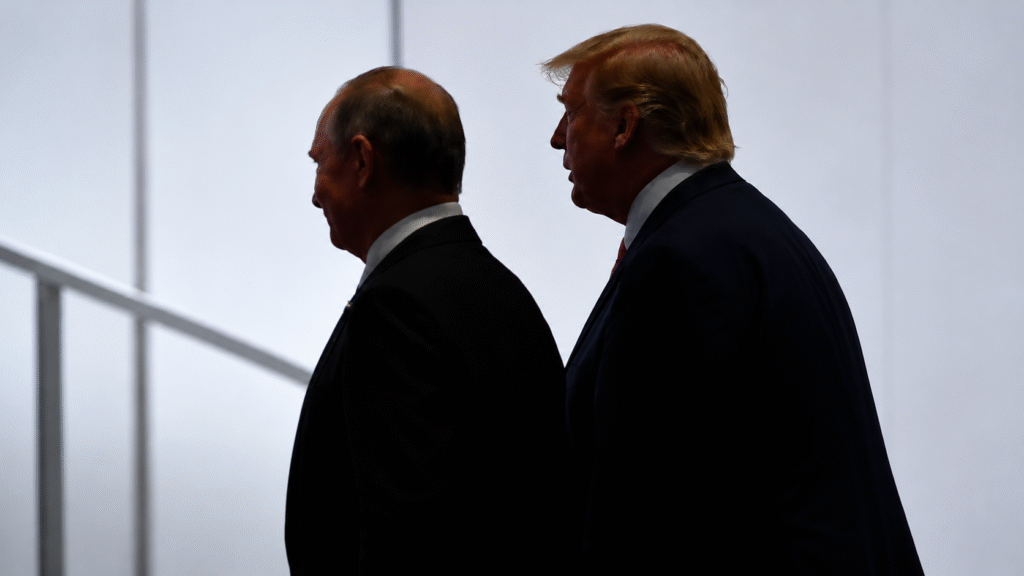
Will Russian diesel solve the American fuel crisis?
That remains uncertain.
The announced agreement is politically significant, but its practical effect will depend on the quantity of fuel actually delivered, the timing of shipments, the ability of refineries and distributors to process and distribute supplies, and the wider condition of international energy markets.
Analysts have cautioned that the additional Russian volumes may be too limited to bring about a substantial and lasting reduction in prices. The broader crisis involves disrupted supplies, refining constraints and uncertainty over the security of energy infrastructure and shipping routes. https://www.aljazeera.com/news/2026/10/10/why-is-us-turning-to-russia-for-diesel-despite-sanctions
Even a meaningful short-term improvement would not necessarily resolve the structural problem.
A temporary increase in imports cannot substitute for secure supply routes, resilient domestic refining capacity and a stable international energy market. Nor can it guarantee lower prices if further disruptions emerge.
The agreement may therefore be more important as a political signal than as a complete economic solution.
It tells markets, Moscow and America’s allies that, when confronted with sufficiently intense domestic pressure, Washington is prepared to reconsider policies that previously appeared central to its international strategy.
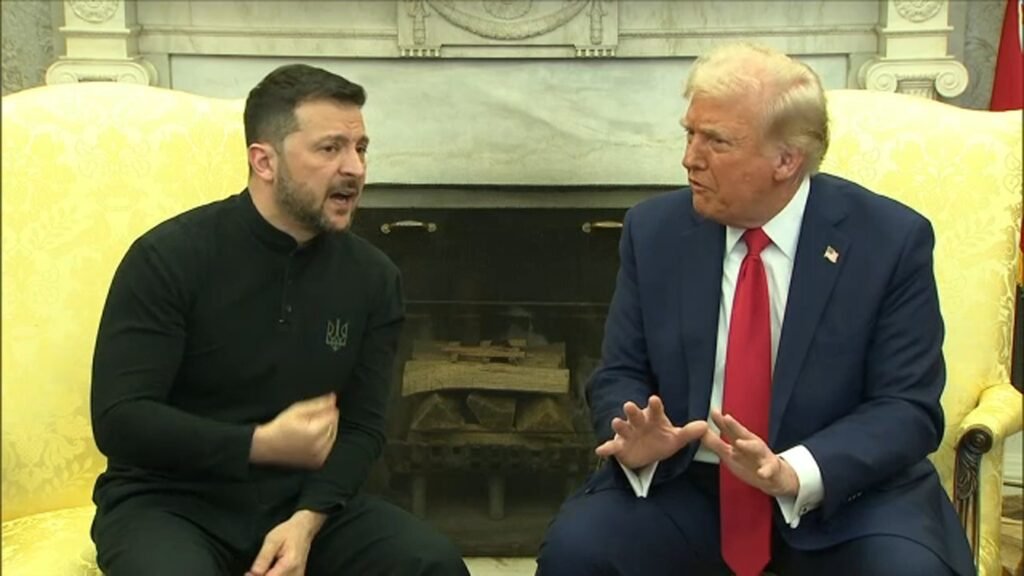
Ukraine: pressure on Zelenskyy and the future of Western support
The implications for Ukraine may be even more consequential.
Trump has publicly suggested that Ukraine should have a new president, adding to tensions with Volodymyr Zelenskyy. The remarks came amid disagreements over the war, Russian energy supplies and the conditions under which negotiations with Moscow might proceed. https://www.washingtonpost.com/politics/2026/10/10/trump-says-ukraine-should-get-new-president-after-us-russia-diesel-deal/
Such comments raise questions about whether Washington’s approach is shifting from supporting Ukraine’s existing strategy towards placing greater pressure on Kyiv to accept a negotiated settlement.
But a distinction must be maintained: Trump’s statements do not establish that the United States has a formal plan to remove Zelenskyy from office. Ukraine’s political leadership remains a matter for Ukrainians and their constitutional institutions.
For Kyiv, the danger is that energy and electoral calculations in Washington could increasingly influence decisions about military assistance, intelligence cooperation and diplomatic support.
For European governments, the challenge is equally serious. If US policy becomes more transactional, European capitals may face greater pressure to finance Ukraine’s defence and maintain sanctions on Russia without the same degree of American alignment.
The central question is whether a settlement pursued under economic pressure would produce a durable peace—or merely postpone another confrontation.
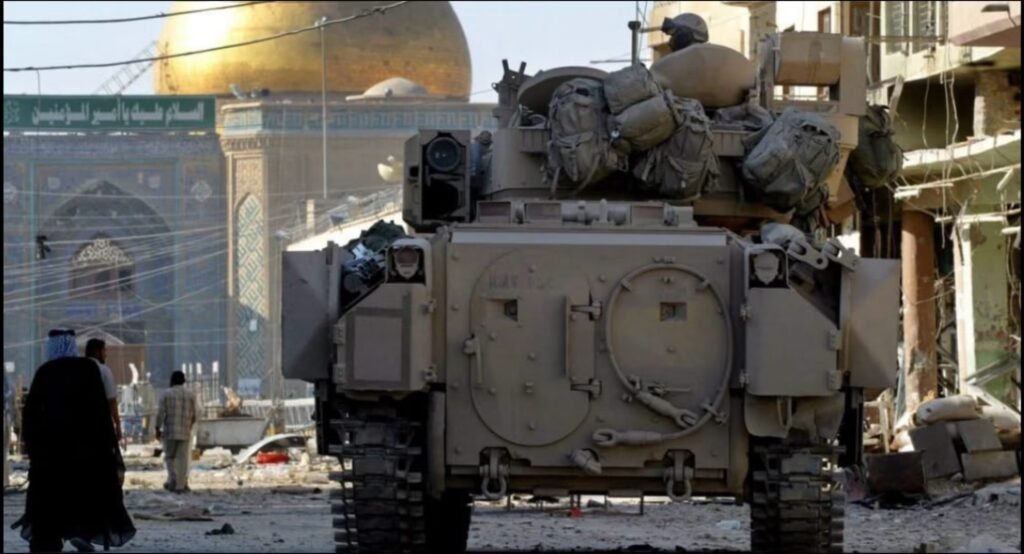
Iraq and Britain: signs of a changing military posture
The wider military picture also deserves attention, although it should not be confused with proof that the Iran war has defeated the United States.
On 30 September, US forces completed their departure from Erbil Air Base, ending the US-led Operation Inherent Resolve mission in Iraq. US Central Command described the move as part of a planned transition to a bilateral defence relationship with Iraq, while the wider counter-Islamic State mission continued from Jordan and in Syria. https://www.dvidshub.net/news/575965/us-forces-end-operation-inherent-resolve-mission-iraq
Separately, US bombers were withdrawn from RAF Fairford in Britain following reported security concerns involving a possible Iranian drone threat. The withdrawal was reported in early October. https://news.sky.com/story/threat-led-to-removal-of-us-bombers-from-raf-fairford-says-trump-13595162
These developments illustrate the changing operational environment facing US forces in the region and at overseas bases.
However, the available evidence does not establish that either move was caused solely by American losses in the Iran war. The Iraq departure was presented as a planned transition, while the bomber withdrawal was linked to a reported security threat.
A serious geopolitical analysis must resist the temptation to treat every military redeployment as proof of defeat. The more important issue is how Washington intends to manage its overseas commitments while confronting simultaneous military, economic and political pressures.
November 3: the domestic political calculation
The timing of the diesel agreement is significant. The United States is approaching its 3 November 2026 congressional midterm elections, in which control of the House of Representatives and a portion of the Senate will be contested. These are not presidential elections. https://www.usa.gov/midterm-elections
Fuel prices matter politically because their effects are immediate and visible. Households see the cost at filling stations, while businesses experience higher transport and operating expenses. When energy costs feed into the price of food and other essential goods, the consequences can influence public confidence in the government.
For the Trump administration, the challenge is to demonstrate that it can ease the cost-of-living burden without undermining its broader foreign policy objectives.
An agreement with Russia offers a visible response to the crisis. Whether it delivers meaningful price relief is another matter.
If prices remain high, the administration may face questions about the effectiveness of its approach. If prices fall, the political benefits could be offset by criticism that Washington has weakened pressure on Moscow and complicated its commitments to Ukraine.
Either way, the agreement has transformed energy policy into a test of the administration’s ability to reconcile domestic economic demands with its international strategy.
A new world order—or a temporary reversal?
It is tempting to describe the Russian diesel agreement as proof that the global balance of power has been turned upside down. The symbolism is undeniable: Washington is seeking supplies from a country it has spent years trying to economically isolate.
But a single agreement does not establish a new world order.
Russia still faces the consequences of its war against Ukraine, while the United States retains considerable military, economic and diplomatic influence. What has changed is the calculation of immediate interests.
Energy security can override ideological consistency. Domestic political pressures can weaken international coalitions. And sanctions, however extensive, cannot eliminate the interdependence of global commodity markets.
The agreement also offers Moscow a strategic advantage in the battle over international perceptions. Russia can argue that its energy resources remain indispensable, while Washington must explain why restrictions previously justified on security grounds are now being relaxed to address domestic costs.
For Europe, the lesson is uncomfortable. A transatlantic alliance may share broad strategic objectives while diverging sharply when economic pressure rises.
For Ukraine, the lesson is more urgent: international support cannot be assumed to remain unchanged when the political priorities of major allies shift.
For the wider world, the lesson is that energy security remains inseparable from national security, trade and diplomacy.
The United States has not become powerless, and Russia has not automatically emerged victorious. But the diesel agreement demonstrates that geopolitical principles can collide with economic realities—and that even the most powerful governments sometimes have to compromise when the cost of maintaining their policies becomes too high.
The defining question is not simply who supplies the diesel. It is who gains the strategic advantage when economic necessity forces yesterday’s adversaries to negotiate.
Paris Telegraph Editorial Team | International Affairs

Paris Telegraph is an independent France-based digital news platform covering Paris news, French politics, European affairs, global business, diplomacy and artificial intelligence.
Publishing timely reporting and in-depth analysis, Paris Telegraph provides international perspectives on geopolitics, economic developments, technology innovation and cultural trends shaping Europe and the world.
As a growing online media outlet, Paris Telegraph is committed to credible journalism, global insight and forward-looking analysis for readers seeking reliable news from Paris and beyond.