
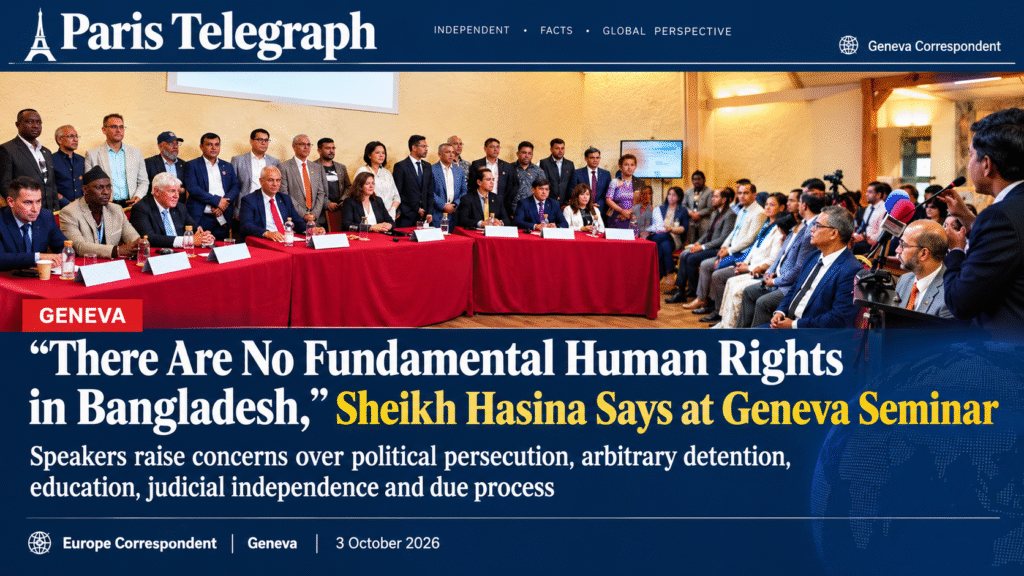
“There Are No Fundamental Human Rights in Bangladesh,” Sheikh Hasina Says at Geneva Seminar
“There Are No Fundamental Human Rights in Bangladesh,” Sheikh Hasina Says at Geneva Seminar
Speakers raise concerns over political persecution, arbitrary detention, education, judicial independence and due process
Paris Telegraph | Geneva Correspondent
GENEVA, Switzerland — 3 October 2026
Former Bangladesh Prime Minister Sheikh Hasina used a seminar at the Geneva Press Club on 2 October to call for greater international attention to what she described as serious human-rights and democratic concerns in Bangladesh.
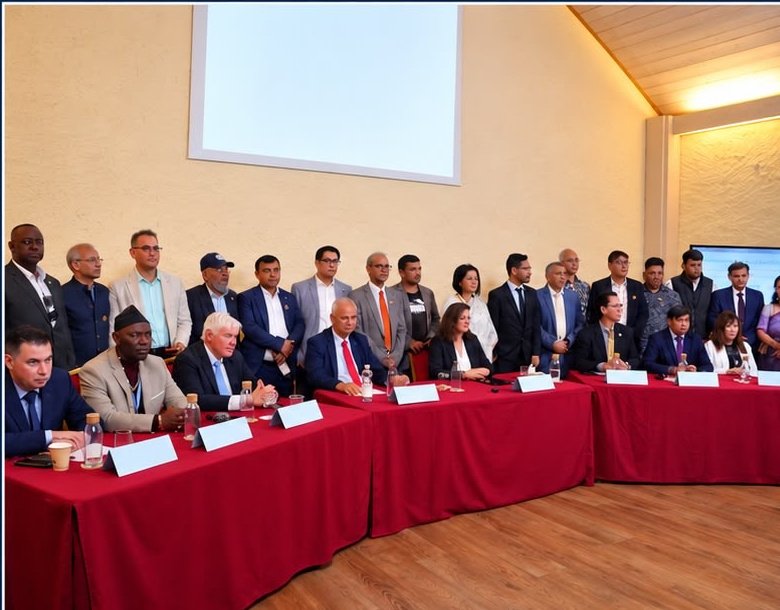
The event, titled “Right to Education, Arbitrary Detention, Fabricated Tribunal Death Sentences and Constitutional Crisis in Bangladesh,” brought together former political representatives, lawyers, human-rights advocates and researchers from Europe, Asia and Africa.
The organisers listed the Global Center for Democratic Governance and Tumuku Development and Cultural Union as the organisers. The programme was moderated by human-rights activist and Geneva Press Club member Rahman Mamun.
Hasina raises concerns over political rights
In her keynote address, Hasina argued that the political transition following the fall of her government on 5 August 2024 had not produced the peace and prosperity she said Bangladeshis expected.
She alleged that Awami League leaders and activists, women and members of the party’s student wing had faced killings, arbitrary detention, intimidation and prosecution because of their political affiliations.
Hasina also alleged that people had died in prison or police custody after being denied adequate medical treatment, and said thousands of Awami League supporters had either been imprisoned or forced into hiding.
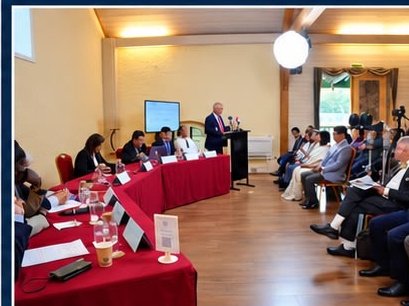
She stressed that political affiliation, in her view, should not be treated as evidence of individual criminal responsibility. She argued that allegations of criminal conduct should instead be examined individually through due process.
Hasina also spoke about education, saying students should not lose access to education or professional opportunities because of their political identity.
According to a report published following the seminar, she called for greater international monitoring of Bangladesh’s rule of law, judicial independence, due process, freedom of expression and political participation.
Questions over Bangladesh’s judicial process
Several speakers focused on the independence of Bangladesh’s judiciary and the treatment of political opponents.
Professor Dr Md Habibe Millat, who delivered the opening remarks, called on human-rights advocates to raise concerns about Bangladesh before the UN Human Rights Council and other international institutions.
Dr Siegfried O. Wolf of the South Asia Democratic Forum discussed allegations concerning restrictions on students, teachers and academics and raised concerns about the position of secular voices within educational institutions.
Former European Parliament member Paulo Casaca described the developments since August 2024 as evidence, in his assessment, of an increasingly restrictive political environment. He also raised concerns about what he characterised as attempts to remove references to Bangladesh’s Liberation War and the country’s founding history from public life.
Carl Gustav Bjertnes, president of SEEDS-AFRICA, emphasised equal treatment and protection from arbitrary detention as fundamental principles of democratic governance and the rule of law.
Japanese human-rights activist Shunichi Fujiki discussed alleged persecution of political opponents, restrictions affecting journalists and concerns about access to justice. He also questioned the legal process surrounding the death sentence imposed on Hasina.
Hasina’s death sentence remains a major international issue
The seminar took place against the background of the 17 November 2025 judgment by Bangladesh’s International Crimes Tribunal, which sentenced Hasina to death in absentia on one charge and to imprisonment until natural death on another in a case concerning the 2024 crackdown. Former Home Minister Asaduzzaman Khan Kamal was also sentenced to death.
Human Rights Watch has raised concerns about the fairness of the proceedings, including the fact that Hasina was tried in absentia and received the death penalty.
Hasina has rejected the allegations against her and has described the proceedings as politically motivated.
UN findings provide a wider context
The discussion at the Geneva seminar comes amid continuing international scrutiny of the violence surrounding Bangladesh’s 2024 political upheaval.
The UN Office of the High Commissioner for Human Rights conducted an independent fact-finding investigation into events between July and August 2024. Its findings documented serious human-rights violations, including killings, arbitrary detention and torture, while also documenting retaliatory attacks against police, Awami League officials and people perceived to be associated with the former ruling party.
An earlier preliminary OHCHR assessment reported that hundreds of people were believed to have been killed during the unrest and called for independent and transparent investigations into alleged violations by all sides.
The UN investigation therefore provides a broader context to the competing claims made at the Geneva seminar: allegations of abuses by security forces during the 2024 protests, as well as subsequent reprisals against members and perceived supporters of the former ruling party.
Detention and the case of Shahriar Kabir
Swedish attorney Mona Haggou Strindberg addressed the issue of arbitrary detention and the criminal justice system.
She discussed the case of writer and journalist Shahriar Kabir, whom she identified as her client, and referred to a 2025 opinion of the UN Working Group on Arbitrary Detention. She argued that detention must be examined against international standards, including legality, judicial review and the right to challenge detention.
Strindberg also stressed that serious crimes can be investigated and prosecuted, but that individual responsibility should be established on the basis of evidence rather than collective political identity.
Questions from journalists and participants
During the question-and-answer session, Hussain Muhammad Imam, editor of Bangladesh Bhabna News, asked why Hasina and the Awami League continued to remain relevant to political discussions in Bangladesh and South Asia after their removal from power.
Casaca responded by questioning the credibility of allegations made against Hasina and referred to what he described as continuing public confidence in her leadership.
Imam also questioned Strindberg about the UN investigation into deaths during July and August 2024 and referred to an alleged death toll of 840. He also raised claims that some people previously reported as dead had subsequently reappeared.
Those claims were not substantiated by evidence presented in the material reviewed by Paris Telegraph for this report.
The UN’s subsequent fact-finding investigation estimated that as many as approximately 1,400 people may have been killed between 1 July and 15 August 2024. The figure was an estimate rather than a final individually verified list of deaths.
Calls for international attention
The seminar also featured Dr Chongsi Ayeah Joseph, president and chief executive of the Center for Human Rights and Peace Advocacy in Cameroon, who stressed the importance of judicial independence and constitutional governance.
Former UN Independent Expert Professor Alfred de Zayas discussed democracy and human rights in Bangladesh and raised questions about the role of major international powers in political change.
Swiss Bangladeshi community leader Jamadar Nazrul Islam asked speakers about the position of journalists and human-rights advocates if Hasina were to return to Bangladesh.
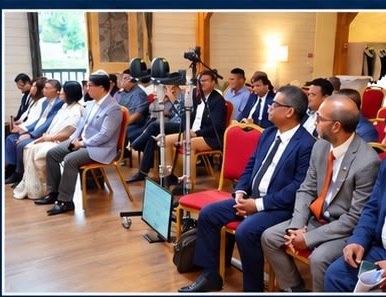
The event was attended by community leaders, journalists and human-rights advocates from several European countries, including former Bangladeshi MP Abu Sayeed Al Mahmood Swapon, Swiss community leader Shyamal Khan, human-rights activist Sazia Rahman, Germany-based community leader Khan Sabra, UK-based activist Akhtar Hossain Bhuiyan Miron, and Portugal-based community representatives Mohsin Rashid and Farhad Khan.
The Geneva gathering reflected the continuing international debate over Bangladesh’s political transition, accountability for the violence of 2024, the treatment of political opponents, judicial independence and the country’s future democratic institutions.
For Paris Telegraph, the central issue emerging from the discussion was not only the competing political narratives surrounding the fall of Hasina’s government, but also the wider question of how Bangladesh can ensure individual accountability, due process, political participation and protection of fundamental rights regardless of political affiliation.
Paris Telegraph — Geneva Correspondent

Paris Telegraph is an independent France-based digital news platform covering Paris news, French politics, European affairs, global business, diplomacy and artificial intelligence.
Publishing timely reporting and in-depth analysis, Paris Telegraph provides international perspectives on geopolitics, economic developments, technology innovation and cultural trends shaping Europe and the world.
As a growing online media outlet, Paris Telegraph is committed to credible journalism, global insight and forward-looking analysis for readers seeking reliable news from Paris and beyond.